
The Hidden Cost of a Poorly Designed Office: What Leaders Are Missing
Noise cuts productivity by up to 66%. Open offices generate 62% more sick days. One ergonomic injury costs $20,000 to $60,000. A 50-person office losing 30 minutes per person per day burns $200,000 in annual payroll. Poor office design is a business performance issue — and every cost in it is fixable.
Post Summary
Poor office design hurts performance through three simultaneous drains: noise distraction, collaboration friction, and ergonomic strain. In open-plan offices, employees are interrupted on average once every three minutes, and noise can cut productivity by up to 66%. Hybrid meeting friction — rooms without integrated technology, cameras that take too long to set up, and remote participants who can't hear — costs an estimated $145,800 per year in a 10-room office from setup time alone. Ergonomic gaps compound the damage: bad workstation fit wears people down across the day, reducing focus and energy before a formal injury claim ever appears. Ergonomic furniture reduces physical discomfort by 22% and increases worker output by 15%.
In a 50-person office with average salaries of $65,000, losing just 30 minutes of usable time per employee per day to noise interruptions, cable friction, and meeting setup adds up to approximately $200,000 per year in payroll waste. That figure does not include absenteeism costs — open-plan offices generate 62% more sick days than better-designed environments — or injury costs, where a single ergonomic-related incident runs $20,000 to $60,000. Turnover adds a third layer: when the workplace creates constant friction, people leave, and the disruption, hiring time, and strain on remaining staff compound the direct financial damage.
Activity-based zoning matches each area of the office to the type of work happening inside it rather than expecting one open floor plan to serve focused work, private calls, and team collaboration at the same time. A soundproof deep-work room supports 90-minute stretches of uninterrupted concentration. Enclosed pods and movable booths handle private calls and sensitive conversations without permanent construction. Open shared areas with communal tables and lounge seating support casual collaboration and lighter tasks. Placing quiet spaces away from walkways and collaboration hubs — a single layout decision — can make a significant difference in how much focused work actually gets done across the day.
Height-adjustable sit-stand desks reduce physical discomfort by 22% and increase worker output by 15%. Paired with ergonomic task chairs offering 4D armrests, pneumatic height control, synchro-tilt, and breathable mesh backs, they address the fatigue that quietly drains productivity later in the day. On the acoustic side, sound masking systems reduce noise-related distractions by 25% and save employees an average of 21 minutes per day — while cutting soundproofing costs by up to $3 per square foot compared with structural acoustic modifications. Ceiling baffles, felt dividers, and fabric-covered screens shape quiet zones without sealing off the office entirely.
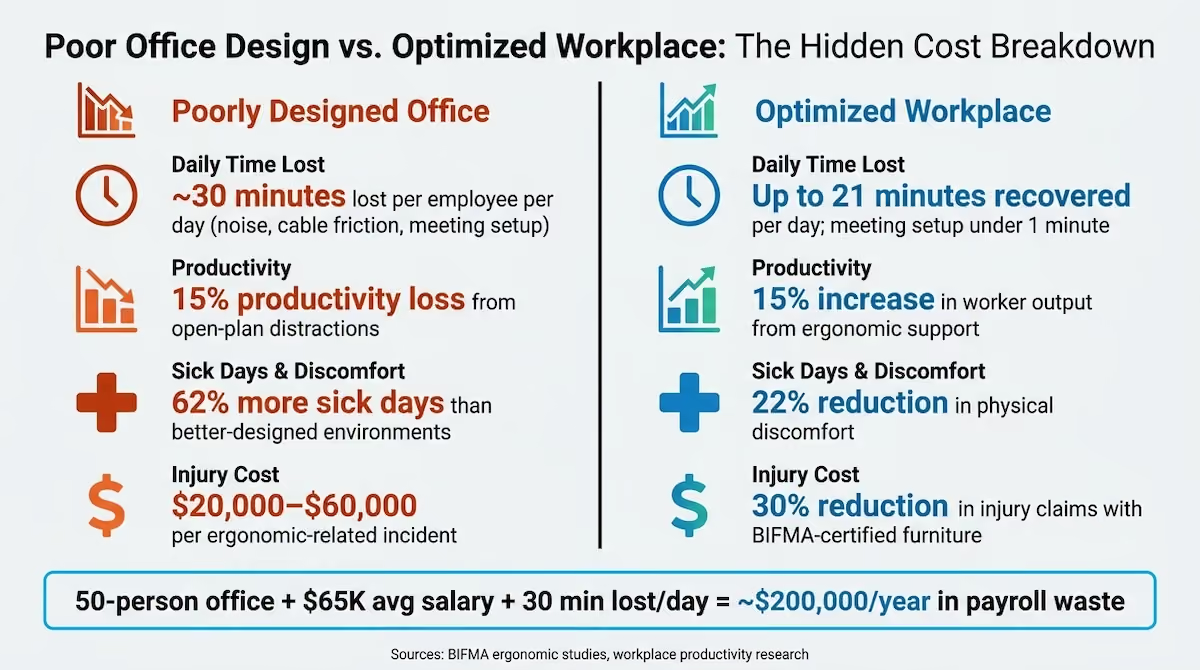
A poorly designed office loses approximately 30 minutes per employee per day to noise interruptions and power and connectivity friction, carries a 15% productivity loss from open-plan distractions, generates 62% more sick days, and faces $20,000 to $60,000 per ergonomic injury. An optimized workplace recovers up to 21 minutes per day through noise reduction, gets meeting setup under one minute with integrated power and connectivity, achieves a 15% increase in worker output through ergonomic support, reduces physical discomfort by 22%, and cuts injury claims by 30% with BIFMA-certified furniture. The losses in the first column are not inevitable — they come from design problems with direct solutions.
A poor office can drain payroll every day. The drain goes beyond rent or furniture spend. It shows up as lost focus, slow meetings, more sick days, and pain from bad workstations.
Here’s the short version: if your office has too much noise, weak meeting-room tech, and poor ergonomics, employee output drops. The article points to numbers that are hard to ignore: noise can cut productivity by up to 66%, open offices can lead to 62% more sick days, and one ergonomic injury can cost $20,000 to $60,000. In a 50-person office with average salaries of $65,000, just 30 minutes of lost time per person per day can add up to about $200,000 a year.
What leaders often miss is simple: office design is not just a space issue. It affects:
- Focus
- Meetings
- Energy and comfort
- Absenteeism
- Turnover
- Payroll waste
The fix is clear: give people quiet areas for deep work, set up rooms that work for hybrid calls, and use desks and chairs that support the body through a full day.
The whole article comes down to one line: when the office creates friction, the business pays for it.
Desk Setup Mistakes Costing You Hours of Productivity
How poorly designed offices reduce employee performance
Poor office design hurts performance in three main areas: focus, meetings, and physical stamina. Most of that damage comes from three problems at once: noise, meeting friction, and ergonomic strain.
Noise distraction and the shortage of focus space
Open-plan offices often lead to more interruptions and less deep work. In these spaces, employees are interrupted, on average, once every three minutes [6]. That constant stop-and-start breaks concentration and slows output.
When there isn't enough quiet space, people usually end up doing one of two things: working while distracted or spending time hunting for privacy. Neither is a good use of payroll. If someone can't find a private spot for focused work or a confidential call, part of their day turns into low-value time instead of productive time.
As Mike Troia, CEO of Office Gallery notes:
"The need for privacy in traditional open-plan workplaces hasn't gone away. Smart employers have adopted a range of spaces away from the main work areas for employees to focus or take confidential calls."
And the problem doesn't stop with solo work. The same weak layout can also make teamwork harder by turning basic meetings into a hassle.
Collaboration friction and hybrid meeting failures
A lot of offices still don't have hybrid-ready meeting rooms. So what happens? Remote attendees struggle to hear, the camera setup takes too long, and the room eats up the first eight minutes just trying to get started. In a 10-room office, that friction can cost an estimated $145,800 a year in lost time [5].
Outside the meeting room, the layout can create another issue. If there are no clear collaboration zones, teams spill into open areas to talk things through. That adds noise for the people nearby and makes it harder for everyone to work. The result is slower discussions, slower decisions, and more drag on the day.
Ergonomic gaps that increase fatigue and absenteeism
Physical discomfort often gets brushed off as a personal problem. But if a chair doesn't adjust well or a desk locks someone into poor posture for hours, the business pays for it. Ergonomic furniture reduces physical discomfort by 22% and increases worker output by 15% [1].
Bad workstation fit wears people down over the course of the day. Focus slips. Energy drops. Even simple tasks can feel harder than they should.
Those costs also show up in absenteeism, injury claims, and lost output. Musculoskeletal disorders caused by poor workspace setups are leading drivers of absenteeism and injury claims [1]. And long before a formal claim appears, poor ergonomics are already cutting into focus and stamina.
The financial impact of poor office design
How distraction and disengagement become annual payroll waste
Performance losses add up fast. Small daily issues turn into payroll waste across the whole team. Noise, hunting for outlets, and wasting time setting up meetings can eat up about 30 minutes of usable time per employee each day.
In a 50-person office with an average salary of $65,000, that drag adds up to about $200,000 per year in lost time. You may not spot that number right away on a spreadsheet, but the cost is there all the same. Desk lighting plays a part too. Employees can be physically present and still not do their best work when the space wears them down [2].
Why absenteeism and turnover raise the total cost
Poor ergonomics make it harder to focus and slow down higher-value work. When discomfort becomes part of the daily routine, absenteeism tends to go up, and turnover risk grows with it.
Turnover adds a second layer of cost. If the workplace creates constant friction, people are more likely to leave. That means more disruption, more time spent hiring, and more strain on the team that stays behind.
Cost snapshot: poorly designed office vs. optimized workplace
Here’s what that looks like in dollar-and-time terms.
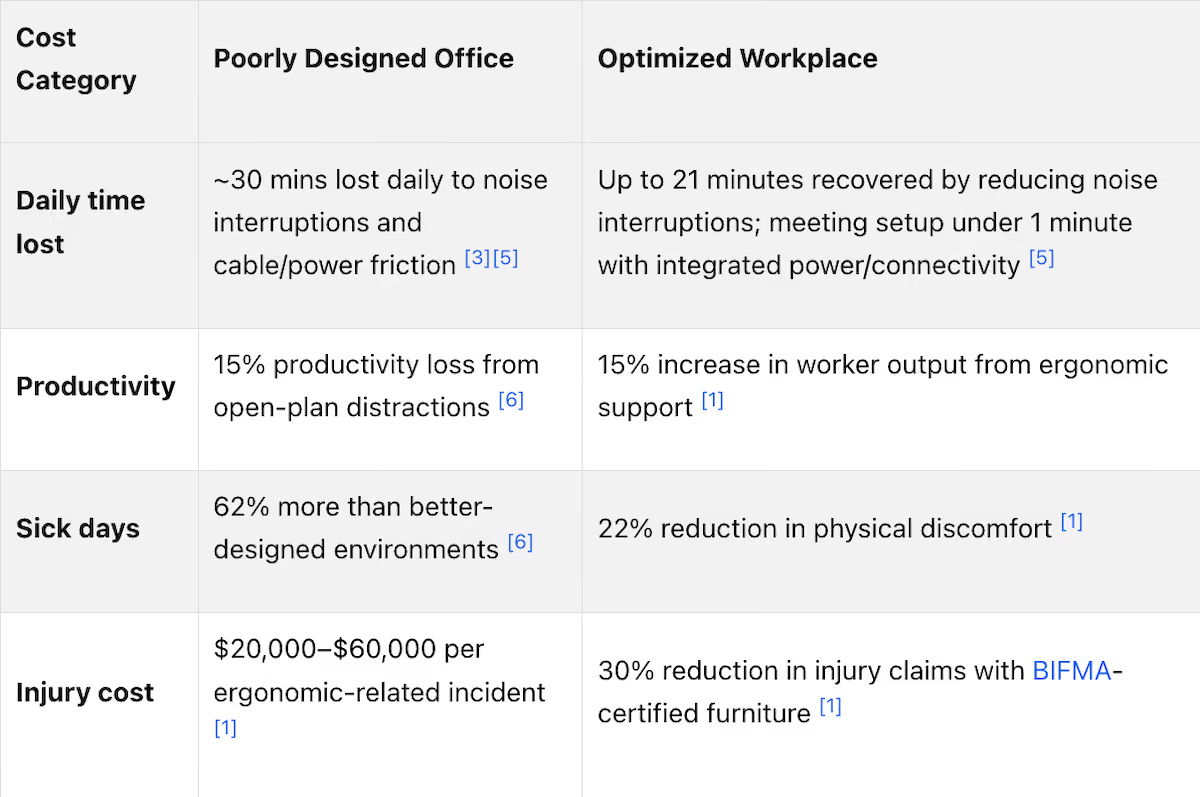
The upside is that these losses can be fixed. Zoning, acoustics, and ergonomic support can remove friction from the workday and give people a space that helps them get more done.
Design solutions that fix each performance problem
These losses aren't abstract. They come from design issues you can fix.
Activity-based zones for focus, collaboration, and private work
Use activity-based zoning to match each space to the work happening inside it. Focused work, private calls, and team collaboration all need different conditions. One open floor plan can't handle all three at the same time.
The best setup breaks the office into clear zones based on how people work day to day. A small soundproof deep-work room gives employees a place for 90-minute stretches of focused, uninterrupted work. Enclosed pods and movable booths make room for private calls and sensitive conversations without adding permanent walls or kicking off major construction. Open shared areas with communal tables and lounge seating support casual collaboration and lighter tasks.
Place quiet spaces away from walkways and collaboration hubs. That one move can make a big difference.
Touchdown areas also help. They give mobile employees a short-stay workspace without taking up a full desk.
Once those zones are set, furniture and acoustic treatment help each area do its job.
Ergonomic and acoustic upgrades that support all-day performance
Height-adjustable sit-stand desks reduce physical discomfort by 22% and increase worker output by 15% [1]. Pair them with ergonomic task chairs that offer real adjustability - 4D armrests, pneumatic height control, synchro-tilt, and breathable mesh backs - and you start to deal with the fatigue that quietly drains productivity later in the day.
On the acoustic side, sound masking systems reduce noise-related distractions by 25% and save employees an average of 21 minutes per day [3]. They can also cut soundproofing costs by up to $3 per square foot compared with structural acoustic modifications [3]. Ceiling baffles, felt dividers, and fabric-covered screens can shape quiet zones without sealing off the office. The result is simple: more time for focused work.
Problem-to-solution design matrix
The matrix below maps each common failure to a direct fix.
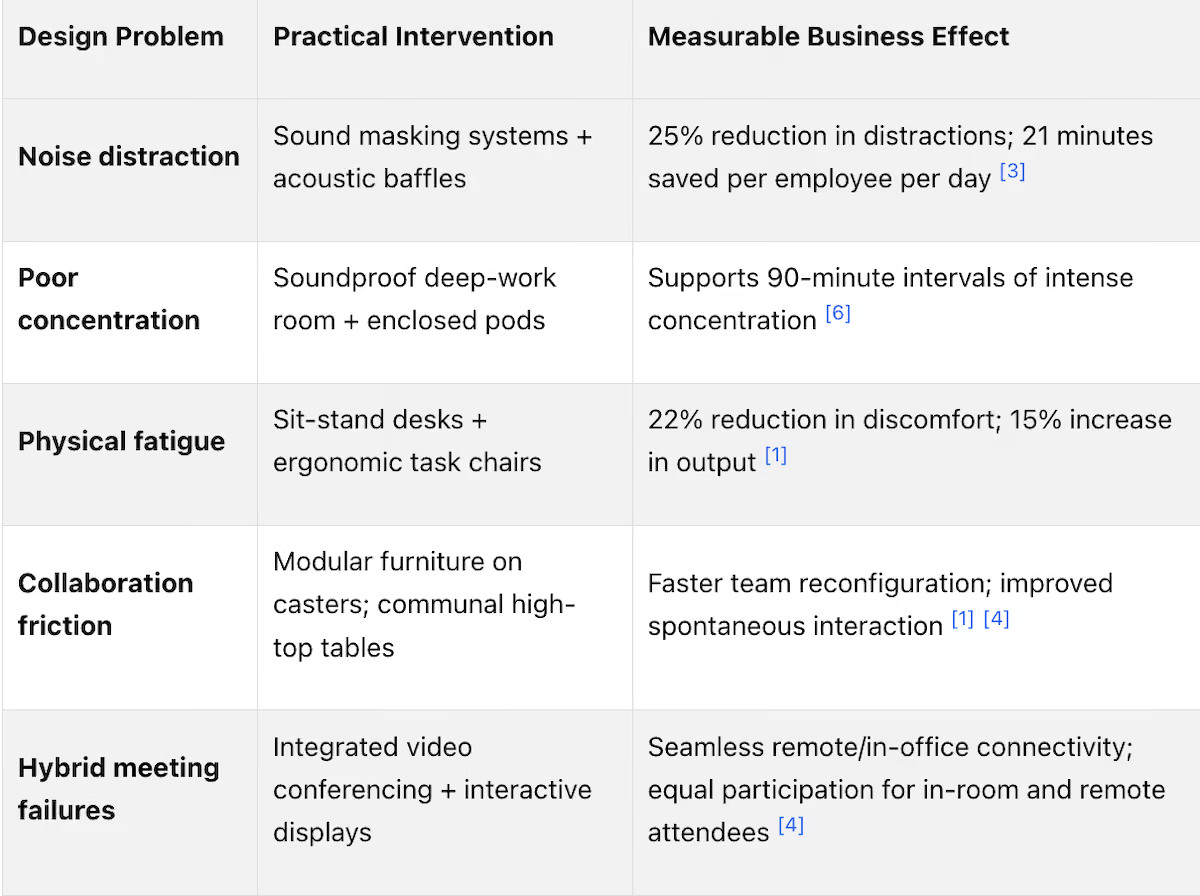
These fixes aren't theoretical. Each one targets a clear drag on performance. And in most cases, you can roll them out step by step instead of redoing the whole office at once.
How Office Gallery International helps Boston-area leaders address these costs
From workplace assessment to performance-focused space planning
Once the hidden costs are on the table, the next move is figuring out where the office is slowing people down. Office Gallery starts with an on-site assessment to spot the friction behind lost productivity. Their team comes to your facility, reviews the layout, maps power and network access, and talks with employees directly to see how work happens day to day. Office Gallery uses on-site consultation to understand how the space is actually used.
That diagnosis shapes the workplace plan. Office Gallery serves Greater Boston organizations.
Furniture specification and project delivery
After the problem is mapped and the plan is set, the focus shifts to execution. Once the assessment is complete, Office Gallery International turns those findings into a practical workplace plan. The plan accounts for activity-based zoning, ADA accessibility, BIFMA ergonomic guidelines, and acoustic treatment. They specify products that match the performance needs of each space.
Function has to come before appearance. From there, their process moves from design through installation. Leadership teams don't have to juggle vendors or handle logistics in-house - Office Gallery takes care of that work.
Conclusion: The cost of poor office design is measurable and fixable
Poor office design isn't just a facilities issue - it's a business performance issue. Noise distraction, ergonomic fatigue, collaboration friction, and hybrid meeting gaps show up as lower output and lost time that could have been avoided.
Each of those costs can be addressed through design. Workplace design is a performance lever: diagnose the friction, fix the layout, and recover lost output. The office should reduce friction, not create it.
FAQs
How can I measure office design costs?
Measure office design costs by looking past the sticker price of desks and chairs. The bigger hit often comes from the hidden day-to-day drains built into your space.
Start by taking inventory of your devices so you can gauge power and connectivity needs. A space may look good on paper, but if people are hunting for outlets or dealing with weak connections, that cost shows up fast in lost time and extra IT headaches.
Employee surveys and utilization studies can help you spot what's not working. They show which areas sit empty and which ones are always in demand. That kind of data makes it easier to see whether your layout supports how people work or gets in the way.
It also helps to track a few clear KPIs, such as:
- Meeting setup time
- IT support calls
- Absenteeism
- Musculoskeletal injury reports
These numbers can reveal problems that furniture pricing alone won't show.
Which office fixes should we prioritize first?
Start by reviewing workflow and space use to spot the biggest friction points. Then focus on fixes that can make an immediate difference:
- Sound masking in open areas
- Power and connectivity built into furniture
- Ergonomic seating and adjustable desks
Also rework the layout so collaboration zones sit alongside quiet, private spaces for focused work.
How quickly can workplace changes pay off?
Workplace changes can pay for themselves fast. Focused fixes like sound masking systems may recover their full cost through productivity gains in 6 to 12 months. In some cases, office layout changes have shown payback in as little as 4 months.
Smaller problems matter too. Better cable management and ergonomics can cut downtime and maintenance costs while helping people work more efficiently.
•••
Ready to transform your workspace? Contact us today to explore how our expert team can design a tailor-made solution that aligns with your brand and enhances productivity. From design inspiration to project management, we'll guide you through every step of the process to create an office space that fosters creativity, collaboration, and success. Let's embark on a journey to redefine your workspace together.
Key Points
Why is poor office design a business performance issue rather than a facilities management issue and what does the financial evidence show?
- $200,000 in annual payroll waste from 30 minutes of daily friction per employee in a 50-person office -- this figure makes the financial argument concrete and calculable; it is not a projection based on theoretical productivity loss but a straightforward calculation of what 30 minutes of daily lost time costs at average salary levels across a mid-sized team
- Noise cutting productivity by up to 66% establishing distraction as a primary performance variable -- this reduction is not a minor inconvenience; it represents the difference between an employee operating near full capacity and one operating at roughly one-third capacity during distraction-heavy periods; across a full workday in a noisy environment, the cumulative output difference is substantial
- Open-plan offices generating 62% more sick days than better-designed environments -- the health consequence of poor office design shows up in absenteeism data before it shows up in injury claims; 62% more sick days in an open-plan environment reflects both the physical discomfort that poor ergonomics produces and the stress response that sustained noise and distraction exposure generates
- $20,000 to $60,000 per ergonomic injury making physical workspace quality a risk management issue -- at this cost per incident, a workplace that produces even two or three ergonomic injury claims per year is generating $40,000 to $180,000 in direct and indirect costs that correct furniture specification would have prevented; the investment in ergonomic furniture is not a comfort expense but a risk reduction calculation
- Turnover amplifying the financial damage beyond direct productivity losses -- when workplace friction becomes part of the daily experience, employees leave; turnover adds hiring costs, onboarding time, and the institutional knowledge loss that does not appear on any productivity report but affects team output for months after each departure
- The costs are measurable and therefore manageable -- the most important strategic insight in this framing is that these are not abstract or unprovable losses; they are calculable costs tied to specific design failures with specific design solutions; leaders who can see the cost can justify the investment to fix it
How does noise distraction specifically impair cognitive performance and what does the interruption frequency data reveal?
- One interruption every three minutes in open-plan offices preventing sustained cognitive work -- sustained cognitive performance on complex tasks requires extended uninterrupted attention; being interrupted once every three minutes means the cognitive state required for deep work is never reached and maintained; the entire workday becomes a series of shallow starts rather than productive sustained sessions
- 23 minutes required to restore full concentration after a single interruption -- this recovery time figure, established in attention research, means that even infrequent interruptions carry a cognitive cost far greater than their duration; a 30-second interruption in an open office costs not 30 seconds but 23 minutes of full cognitive capacity
- Noise as a stressor triggering cortisol elevation that persists after the noise ends -- the physiological stress response to noise does not resolve when the noise stops; cortisol elevated by noise exposure persists, affecting mood, decision-making quality, and energy levels throughout the remainder of the day regardless of whether the noise continues
- Lack of quiet space converting work time into search time -- when employees cannot find a private space for focused work or a confidential call, time that should be productive becomes time spent searching for privacy; this search time is invisible in productivity reports but real in payroll cost
- Sound masking recovering 21 minutes per employee per day through distraction reduction -- at this recovery rate, a 50-person office implementing sound masking recovers approximately 17.5 hours of productive time per day across the team; annualized, that is a significant productivity recovery from a single acoustic intervention
- Quiet zone placement away from walkways and collaboration hubs as the highest-return single layout decision -- this specific placement guidance, cited by workplace design expert Kate Collier, requires no furniture purchase and no construction; it is a layout decision that can be implemented in the existing space and that immediately reduces the interruption exposure of employees doing focused work
What makes hybrid meeting room failures so costly and what specific interventions address the problem?
- $145,800 annual cost in a 10-room office from meeting setup friction alone -- this figure quantifies what seems like a minor daily inconvenience — spending the first eight minutes of a meeting getting technology to work — into an annual cost that most leaders would find surprising; across 10 rooms running multiple meetings per day, setup friction is a significant payroll drain
- Remote attendees unable to hear as the most common and damaging hybrid meeting failure -- when remote participants cannot hear the in-room conversation clearly, they disengage, miss information, and contribute less; the meeting produces fewer useful outcomes than it should, and the remote participant's time and salary cost is partially wasted regardless of how long the meeting runs
- Camera placement and display position determining whether remote participants feel present or peripheral -- the furniture and technology arrangement of the conference room determines the visual geometry of the hybrid meeting; a camera placed incorrectly makes remote participants appear as a side monitor rather than as equal meeting participants, which affects both their contribution and their experience of the meeting
- Collaboration spill from rooms into open areas creating a noise externality for surrounding workers -- when there are no clear collaboration zones, team discussions happen in open areas and create noise for the employees nearby who are trying to do focused work; this externality means that one team's collaboration friction becomes another team's distraction problem
- Integrated power and data at every meeting room seat reducing setup time to under one minute -- the technology friction that causes eight-minute meeting startups is largely addressable through furniture specification; tables with integrated power grommets and data connections eliminate the extension cord and adapter search that consumes meeting start time
- Modular furniture enabling room reconfiguration for different meeting types and sizes -- a single large fixed conference table that seats 12 serves a four-person hybrid call poorly; modular furniture that reconfigures for different group sizes and meeting formats serves each meeting type appropriately without requiring a different room for each format
How do ergonomic gaps translate from individual discomfort into organizational financial exposure?
- Ergonomic discomfort as a presenteeism driver before it becomes an absenteeism driver -- the productivity losses from poor ergonomics begin long before an employee calls in sick or files a workers' compensation claim; fatigue, reduced concentration, and lower energy from physical discomfort affect daily output quietly and continuously without appearing in any formal report
- Musculoskeletal disorders as leading drivers of absenteeism and injury claims -- these conditions, which develop gradually from sustained poor workstation fit, represent a predictable and preventable category of organizational cost; organizations that do not address ergonomic risk are not avoiding these costs — they are deferring them until they become clinical and therefore more expensive
- 30% reduction in injury claims with BIFMA-certified furniture establishing the prevention value of specification quality -- this reduction represents a specific, documented outcome of correct furniture specification; organizations that invest in BIFMA-certified ergonomic furniture are not simply improving comfort — they are reducing the frequency of events that cost $20,000 to $60,000 each
- Physical fatigue compounding cognitive fatigue across the second half of the workday -- the interaction between physical discomfort and cognitive performance means that ergonomic inadequacy does not only produce physical symptoms; it accelerates the cognitive fatigue that reduces the quality of decision-making, writing, analysis, and problem-solving in the afternoon hours when the body's energy reserves are already lower
- 22% reduction in physical discomfort from ergonomic furniture translating to 15% increase in worker output -- this pairing of discomfort reduction and output increase documents the causal link between physical comfort and productive performance; it is not a wellness claim but a productivity claim supported by research
- The 4D armrest, synchro-tilt, and breathable mesh back as the specification details that determine actual ergonomic performance -- not all ergonomic chairs deliver ergonomic benefit equally; the specific adjustment capabilities — 4D armrests, pneumatic height control, synchro-tilt mechanism, and breathable mesh back — are what separate a genuinely supportive chair from one that is marketed as ergonomic without the adjustment range to serve different body types and work patterns
How should Boston-area leaders sequence office design improvements to recover performance losses without overhauling the entire office?
- Diagnosis before specification as the required first step -- the on-site assessment that maps actual friction points — where focus work is failing, where meetings are losing time, where physical discomfort is accumulating — is the prerequisite for effective investment; without diagnosis, improvements address assumed problems rather than actual ones and may miss the specific failures costing the most
- Activity-based zoning as the highest-leverage layout intervention -- breaking the office into clear zones for focused work, collaboration, and private calls addresses the noise, concentration, and collaboration friction problems simultaneously through a layout decision that may require furniture repositioning rather than construction; this is the intervention with the broadest performance impact per dollar invested
- Sound masking as the fastest acoustic return on investment -- sound masking systems can be installed in existing offices without structural modification, deliver measurable distraction reduction immediately, and cost less per square foot than structural acoustic alternatives; for organizations not ready for a full acoustic redesign, sound masking is the practical first acoustic step
- Sit-stand desk and ergonomic chair specification at high-use workstations as the targeted ergonomic investment -- rather than replacing all workstation furniture simultaneously, identifying the positions where employees spend the most hours and specifying height-adjustable desks and properly adjustable ergonomic chairs at those positions first concentrates ergonomic investment where the return is highest
- Hybrid meeting room technology integration as the collaboration ROI investment -- for organizations with documented meeting friction, integrating power, data, and display technology into conference room furniture is the intervention that most directly recovers the $145,800 annual meeting cost; the investment is recoverable within months at the documented cost of meeting setup friction
- Office Gallery's phased approach allowing improvement without full office replacement -- Office Gallery's on-site assessment identifies which specific interventions will recover the most performance per dollar invested, allowing Boston-area organizations to implement improvements in phases rather than requiring a full office overhaul; contact the team at 781-762-3733 or visit the showroom at 151 Carnegie Row in Norwood to begin the assessment conversation
What does the design solution matrix reveal about the relationship between specific office problems and measurable business outcomes?
- Each design problem mapping to a specific intervention with a documented measurable effect -- the matrix format makes explicit what is often implicit in workplace design conversations: that design decisions are not aesthetic choices but performance decisions with quantifiable consequences; noise distraction addressed through sound masking produces a 25% reduction in distractions and 21 minutes saved per employee per day — not a vague improvement but a specific, measurable outcome
- Poor concentration addressed through physical enclosure rather than behavioral expectation -- expecting employees to maintain concentration in environments that structurally prevent it is a management failure, not an employee failure; soundproof deep-work rooms and enclosed pods provide the physical conditions that sustained concentration requires, shifting the responsibility from employee willpower to workplace design
- Physical fatigue addressed through furniture specification rather than wellness programming -- sit-stand desks and ergonomic task chairs address physical fatigue at its source — the workstation — rather than through wellness programs that address symptoms without changing the environment that produces them; the 22% discomfort reduction and 15% output increase are workstation specification outcomes, not wellness program outcomes
- Collaboration friction addressed through furniture mobility rather than cultural mandates -- modular furniture on casters that enables rapid reconfiguration addresses collaboration friction more effectively than cultural initiatives encouraging collaboration; when the physical environment makes collaboration easy, it happens; when it requires effort to arrange a suitable space, it happens less
- Hybrid meeting failures addressed through infrastructure specification -- integrated video conferencing and interactive displays specified as part of the meeting room furniture package address hybrid meeting failures at the infrastructure level rather than requiring employees to manage technology workarounds; equal participation for in-room and remote attendees is a furniture and technology specification outcome
- The cumulative effect of all five interventions recovering the full $200,000 annual payroll loss -- no single intervention recovers the full cost of poor office design; the matrix works as a system where each intervention addresses a specific cost category, and together they recover the noise loss, meeting friction loss, ergonomic loss, absenteeism cost, and turnover risk that individually designed spaces allow to accumulate unchecked