How to Choose Office Furniture Within Your Budget: Tips and Tricks
Choosing office furniture within your budget doesn’t mean sacrificing quality or comfort. This guide walks you through assessing your workspace, prioritizing ergonomic essentials, comparing materials and brands, and leveraging cost-saving strategies like sales and multifunctional pieces.
Post Summary
Assess your workspace by measuring the area, sketching a layout, and identifying essential furniture needs before making any purchases.
Core productivity furniture like desks and chairs should account for 40–50% of your total furniture budget, with task chairs alone often representing 20–25%.
Laminate and metal are budget-friendly and durable; solid wood is more expensive but lasts longer. Used or remanufactured furniture can also provide quality at lower prices.
Time purchases around sales, choose multifunctional pieces, compare brands, and factor in delivery and assembly fees. Modular furniture and professional design services can also help maximize value.
Ergonomic furniture boosts productivity and prevents health issues. Entry-level ergonomic chairs start at $199–$299, and affordable accessories like footrests can improve comfort.
How to Choose Office Furniture Within Your Budget: Tips and Tricks
When furnishing an office on a budget, focus on balancing cost, functionality, and comfort. Start by assessing your space and prioritizing ergonomic essentials like chairs and desks, which directly impact productivity and employee health. Modular furniture and multifunctional pieces can maximize flexibility and save money over time. Materials like laminate and metal offer durability without high costs, while used or remanufactured furniture can provide quality options at reduced prices.
To save more, time purchases around sales, compare brands for value, and allocate a specific percentage of your budget to furniture. Delivery and assembly fees, as well as accessories, should also be factored in. Investing in durable, ergonomic solutions now can help avoid costly replacements or health-related issues later. Plan wisely, and you can create a functional, professional workspace without overspending.
Smart Office Furniture Tips: Save Money by Buying Only What You Need
Assess Your Workspace Requirements
Before diving into purchases, take a moment to evaluate your workspace. Start by sketching a simple layout of the area, marking windows, electrical outlets, and fixed features. These elements will determine where desks, storage, and other furniture can realistically fit. Also, think about traffic flow - how people move through the space. Will you need to expand, downsize, or reconfigure areas?
Blocking pathways can disrupt efficiency, so it’s worth getting this right. If the layout feels overwhelming, consider hiring a professional space planner to help you make the most of your square footage. These early measurements will guide the detailed planning steps ahead.
Measure Your Office Space and Layout
Accurate measurements are essential to avoid costly mistakes. Measure the total square footage, calculate how many employees the space can comfortably accommodate, and plan workstation placement to make the most of natural light - this can help reduce eye strain. For budgeting, some suppliers offer fully furnished office packages at around $20 per square foot [1], providing a helpful reference point.
If flexibility is important, look into modular furniture systems. These can be reconfigured as your business evolves, making them a smart long-term investment.
Identify Required Furniture Pieces
Start by focusing on the essentials. Core productivity furniture, like desks and chairs, should account for 40-50% of your total furniture budget [3]. Task chairs alone are a big-ticket item, often representing 20-25% of the budget due to their impact on comfort and productivity [3].
To stay organized, use a priority system. Begin with the must-haves: workstations and at least one meeting area. Once the basics are covered, you can think about extras like collaborative spaces or décor. Opt for multi-functional furniture - desks with built-in storage or mobile carts that serve dual purposes are great for making the most of smaller spaces. For larger teams, standardized furniture systems can streamline operations and provide a consistent look and feel.
By prioritizing essential and versatile pieces, you’ll create a workspace that’s both functional and adaptable.
Focus on Ergonomics and Functionality
Ergonomics isn’t just a nice-to-have - it’s critical for employee well-being and productivity. The Canadian Centre for Occupational Health and Safety highlights its importance:
Ergonomics is not a product but a process: a process of matching furniture... to the workers (and their work tasks) to reduce the hazards for injury and discomfort without undermining productivity. [6]
The good news? You don’t need to blow your budget to achieve ergonomic comfort. Entry-level ergonomic chairs start at $199–$299, while premium models can range from $499 to over $800 [4][5]. If standing desks are out of reach, consider standing desk converters as a more affordable alternative. Even small additions like adjustable footrests (around $99) can improve posture at traditional desks [4][6].
Before committing to any furniture, let your team test it out. This ensures the equipment meets their needs and fits their body types. Look for chairs with adjustable armrests and interchangeable parts to accommodate a range of users without overspending [6]. Investing in ergonomic solutions now can boost productivity and help you avoid costly health-related issues later on.
Set a Realistic Budget
Once you've evaluated your workspace requirements, it's time to establish a budget that makes sense for your needs. Think about factors like the number of employees, the type of layout you’re aiming for, and the specific demands of your work environment [7]. Instead of sticking to a fixed number, consider setting a budget range. This approach gives you flexibility while ensuring you invest in durable, long-lasting furniture [7].
Don’t forget to factor in additional costs. Delivery and assembly fees typically add 10–15%, while accessories can tack on another 5–10% [7].
Allocate a Percentage of Your Total Office Budget
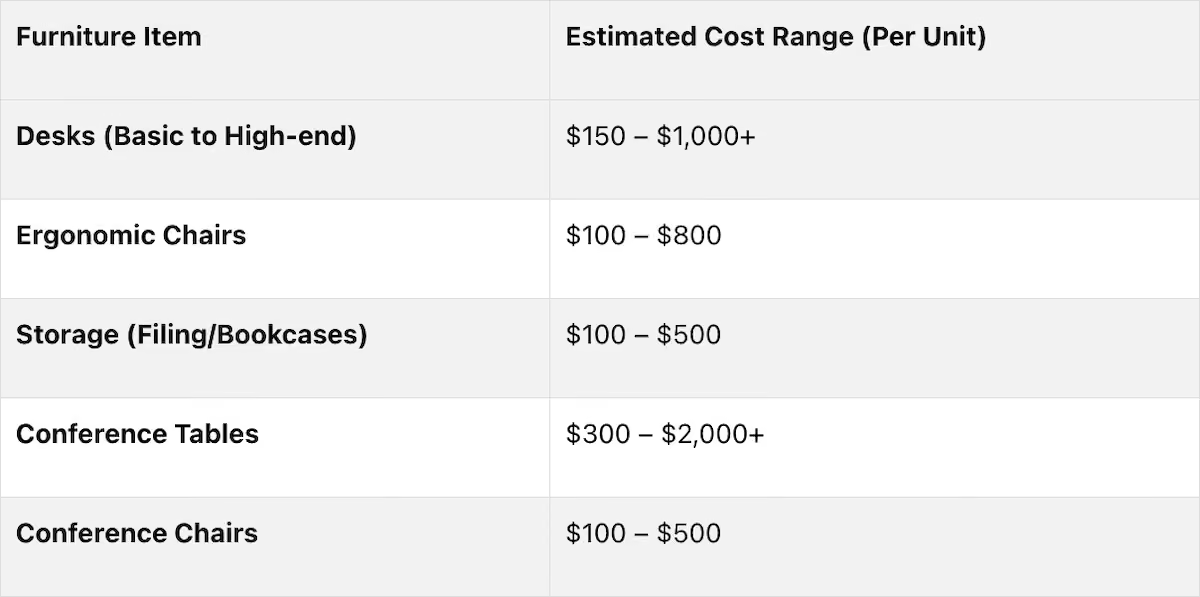
Dedicate a specific portion of your overall office budget to furniture. While the exact percentage will vary depending on your priorities, having a clear allocation can help you avoid overspending or making impulsive decisions. Here's a general guide to help you estimate costs for essential furniture items:
Focus on Long-Term Value Over Initial Cost
While it might be tempting to go for the cheapest options, lower-cost furniture often ends up being more expensive in the long run.
Investing in durable, high-quality furniture reduces the need for frequent replacements. Commercial-grade materials, like high-pressure laminate, are better at resisting scratches, stains, and heat compared to standard options [9]. Also, look for products with ANSI/BIFMA certifications. These standards ensure the furniture has been tested for safety, weight capacity, and durability [10][12]. Manufacturer warranties on new furniture can also save you from unexpected repair costs [11].
For tighter budgets, modular or flexible furniture systems are a smart choice. They can adapt as your business grows, eliminating the need to replace fixed pieces down the road [7][8]. Another option is high-quality used or remanufactured furniture. These can offer premium brands at a fraction of their original price [7][8].
Compare Materials and Brands for Value
Once you've assessed your space and budget, the next step is to compare materials and brands to get the most for your money.
The material you choose plays a big role in both up-front costs and long-term durability. Laminate is the most budget-friendly option, offering strong resistance to scratches and stains while mimicking the look of wood or stone [13]. Metal, like steel or aluminum, sits in the mid-price range and is highly durable, making it ideal for busy areas [13]. Engineered wood (like MDF or particleboard) or Wood Veneer offers a lower-cost alternative to solid wood but comes with reduced durability and moisture resistance [13].
For areas with heavy use, metal or high-pressure laminate are excellent choices for their durability [13]. On the other hand, solid wood or wood veneer can add a polished, professional feel to executive spaces without requiring the use of solid wood throughout [15].
Evaluate Material Options Based on Cost and Durability
Choosing materials that match your needs for function and longevity is essential. Just as ergonomic design boosts productivity, high-quality materials ensure your furniture stands the test of time.
Budget-Friendly Brands at Office Gallery International
Office Gallery International provides a range of brands that deliver excellent quality without breaking the bank. AIS offers the Calibrate Series, featuring durable laminate finishes and versatile hardware, plus their Express Seating program delivers high-performance chairs in just three days [16]. Three H Furniture Systems brings a custom millwork aesthetic with floating shelves and storage options - all at a fraction of the cost of custom furniture [16]. For value-conscious buyers, Offices-To-Go offers affordable options like the Superior Laminate series and Ventnor Wood Veneer, which combines refined veneers with solid wood accents [17].
Use Cost-Saving Strategies
With your budget in place, it’s time to make every dollar count. Smart shopping can help you furnish your office without overspending. By timing your purchases, opting for multifunctional pieces, and leveraging professional design services, you can get more value for your money.
Choose Multifunctional and Space-Saving Furniture
Another way to stretch your budget is by choosing furniture that serves multiple purposes. For instance, storage ottomans double as seating and filing solutions, while cabinets designed for both files and supplies eliminate the need for separate units[21][22]. Bench desks are another cost-effective option, creating continuous workspaces that save floor space and cost less per person compared to individual desks[21].
Wall-mounted units and floating shelves are perfect for smaller offices, as they maximize vertical space without taking up floor area[21][23]. Modular furniture systems also provide long-term flexibility, allowing you to reconfigure or expand as your needs grow[22].
Use Office Gallery International's Services
To ensure you’re making budget-friendly choices, consider using Office Gallery International’s design services. Their team specializes in creating efficient layouts that make the most of your existing space, helping you avoid unnecessary furniture purchases or larger-than-needed layouts[24]. They also assist with selecting ergonomic and multi-purpose pieces, like modular storage and adjustable desks, which offer long-term value and adaptability[24].
"At Office Gallery, we take the guesswork out of office space planning. We can help with design, layout, furniture selection, and more." - Office Gallery International
Their comprehensive project management services cover everything from the initial consultation and space planning to product selection and installation[24]. This approach ensures that every piece of furniture serves a clear purpose, helping you avoid mismatched items or costly mistakes. Scheduling a consultation with their designers can help you identify furniture that’s both functional and cost-effective, reducing the total number of items you’ll need to purchase[24].
Conclusion
Furnishing your office on a budget doesn’t mean sacrificing quality or functionality. By carefully measuring your space, prioritizing ergonomic essentials, and choosing durable materials, you can create a productive workspace without overspending. Since furniture typically accounts for 13% to 16% of total office fit-out budgets[22], strategic planning can significantly impact your overall expenses.
The trick lies in balancing upfront costs with long-term value. As industry experts point out:
Purchasing furniture that does not last its expected lifespan creates a need for replacement.
To avoid this, consider modular systems and multifunctional furniture. These options not only adapt to your growing business needs but can also save 40% to 60% compared to buying brand-new items[22]. Additionally, timing purchases around sales, buying in bulk, and utilizing vertical storage are practical ways to stretch your budget further.
For expert support, Office Gallery International offers services like free space planning, layout design drawings, installation, and ongoing assistance. Their team has decades of experience helping businesses create functional and stylish workspaces that align with budget constraints. Whether you’re setting up a new office or refreshing your current one, their showroom and virtual tours let you explore options before making a decision.
If you're ready to upgrade your workspace without overspending, reach out to Office Gallery International. Their team can help you design a workspace that meets your needs and stays within your budget.
FAQs
How can I furnish an office on a tight budget?
Furnishing an office on a budget doesn’t have to be overwhelming. Start by focusing on the essentials - only get what you truly need to create a functional workspace. Consider buying secondhand furniture or repurposing items you already have. Thrift stores, online marketplaces, and garage sales can be goldmines for affordable finds.
If you’re feeling creative, DIY projects can help you craft unique, personalized pieces without spending much. To make the most of your space, declutter and organize effectively. Simple storage solutions can go a long way in keeping your office tidy and efficient.
For décor and lighting, look for affordable options that still add personality to the space. Multifunctional furniture is another smart choice - it saves space and money by serving multiple purposes. Finally, prioritize durable items that will last, ensuring you get the most value for your investment.
How do I make small office spaces look stylish?
To make a small office both functional and stylish, focus on smart use of space and decor. Maximize your walls with items like DIY artwork, decals, or framed prints to add personality without taking up floor space. Mirrors and clever lighting, such as LED strips, can brighten the room and make it feel more spacious.
When it comes to furniture, choose compact, multifunctional pieces - think desks with built-in storage or foldable options to keep clutter under control. Bring in some life with low-maintenance plants and add a welcoming vibe with cozy details like rugs or throw cushions. These small touches can transform your office into a fresh and inviting workspace.
Key Points
How should you assess your workspace before buying office furniture?
- Sketch a layout: Mark windows, outlets, and fixed features to plan furniture placement.
- Measure accurately: Calculate total square footage and ensure enough space for employees and traffic flow.
- Identify essentials: List must-have items (desks, chairs, storage) before considering extras.
- Consider flexibility: Plan for future expansion or reconfiguration with modular furniture.
- Professional help: Hire a space planner if the layout feels overwhelming.
What’s the best way to set and manage an office furniture budget?
- Budget allocation:
- Desks and chairs: 40–50% of total budget
- Task chairs: 20–25% due to their impact on comfort and productivity
- Set a range: Allows flexibility for unexpected needs or upgrades.
- Include all costs:
- Delivery and assembly: add 10–15%
- Accessories: add 5–10%
- Prioritize essentials: Cover must-haves first, then add collaborative or decorative pieces as budget allows.
- Long-term focus: Invest in durable, adaptable furniture to avoid frequent replacements.
How do you balance cost, durability, and style when choosing materials and brands?
- Laminate:
- Most budget-friendly
- Resists scratches and stains
- Mimics wood or stone appearance
- Metal (steel/aluminum):
- Mid-range price
- Highly durable for busy areas
- Solid wood:
- Higher upfront cost
- Lasts for decades with proper care
- Best for executive or high-visibility spaces
- Engineered wood (MDF/particleboard):
- Lower cost, less durable
- Brand selection:
- Choose reputable brands with good warranties
- Consider used or remanufactured options for premium quality at lower prices
What cost-saving strategies can help you furnish an office without overspending?
- Shop sales and promotions:
- Back to School, Presidents Day, and spring sales offer up to 70% off
- Sign up for retailer emails for instant discounts
- Buy multifunctional furniture:
- Desks with built-in storage, storage ottomans, and bench desks save space and money
- Use modular systems:
- Adapt as your business grows, reducing future costs
- Leverage professional design services:
- Avoid unnecessary purchases and optimize space
- Buy in bulk:
- Reduces per-item cost for larger teams
- Consider high-quality used/remanufactured furniture:
- Access premium brands at a fraction of the price
Why is ergonomic furniture a smart investment, even on a budget?
- Boosts productivity:
- Reduces discomfort and fatigue, improving focus
- Prevents health issues:
- Entry-level ergonomic chairs ($199–$299) and footrests ($99) support posture
- Test before buying:
- Ensure fit for different body types and work tasks
- Adjustable features:
- Armrests, seat height, and lumbar support accommodate various users
- Long-term savings:
- Reduces risk of costly health-related absences and replacements
How can professional services help you stay within your office furniture budget?
- Space planning:
- Experts create efficient layouts, maximizing every square foot
- Furniture selection:
- Guidance on ergonomic, multi-purpose, and modular pieces
- Project management:
- Handles everything from design to installation, avoiding costly mistakes
- Showroom/virtual tours:
- Try before you buy, ensuring the right fit and style
- Ongoing support:
- Assistance with reconfiguration, maintenance, and future upgrades