How a Growing Medical Technology Company Used Workplace Design to Fuel Team Performance — A BTL Client Story
BTL grew from a dozen employees to nearly 400 in a decade. When the adjacent space became available, they did not hesitate. Office Gallery designer Molly converted broad ideas and unknowns into a leadership-approved workspace that produced phenomenal employee feedback, spontaneous collaboration, organizational pride, and a referral before the project was even complete.
Post Summary
BTL had grown from roughly a dozen employees to nearly 400 in a decade, with multiple independent business segments each requiring their own team infrastructure and new operational areas coming online continuously. When the adjacent space became available, leadership exercised their first right of refusal immediately. The decision was not driven by a space crisis but by a growth trajectory that was already confirmed and a longer-term ambition to take over the entire building. The workspace investment was made to serve the team they had, the team they were building, and the team they intended to become.
Jason Wooden, the BTL leader overseeing the project, described himself as a difficult client to work with structurally, someone who moves between ideas and brings broad directional input rather than a precise brief. His starting point for the design was essentially a color palette and a set of intentions. Molly's task was to convert those broad ideas and significant unknowns into a package that a CEO who had not been part of any conversation could look at, understand immediately, and approve without reservation. She delivered exactly that. Jason's boss was not only able to sign off easily but was genuinely happy with the outcome. The trust that made this possible was built through Molly's consistent approach of seeking clarification rather than making assumptions, staying available throughout the process, and handling a non-linear client with professionalism at every stage.
The installation team was efficient and clean, and the walkthrough at the end of the process revealed a complete project with nothing out of place, nothing missing, and nothing that prompted a question about whether something should look different. For an organization like BTL that was actively operating through the installation process, a clean and complete handover was a meaningful operational outcome in its own right. Jason was very happy with the installers.
Jason described the employee feedback as phenomenal across every element of the space including the tables, chairs, stand-up desks, and reception setup. Outside vendors who visited were visibly impressed. The collaboration outcome has been the most meaningful operational result. BTL designed the space with high collaboration as an explicit goal, and the result is that people walk by one another and connect spontaneously without scheduling meetings or finding offices. Jason described the finished project as a moment of pride for all of them, not just for himself or the leadership team but for everyone who works there.
Before the BTL project was even complete, Jason had already referred Office Gallery to Amatech UEI for chairs. When asked what he would tell another company considering a workplace transformation, his answer was immediate: the team is absolutely the referral when it comes to office space, and if someone asks him whether he knows anyone who can help, there is no option A and no option B. He named Molly, Mike, and Hilary specifically by name. The referral reflects the natural outcome of a partner relationship that understands the business problem, designs to solve it, and delivers a result the entire organization can feel.
When Growth Outpaces Your Space
There is a point in every high-growth company's trajectory where the physical space stops keeping up with the business. For BTL Industries, that point arrived after a decade of sustained expansion that took the organization from roughly a dozen people to nearly 400: multiple independent business segments, new devices coming online, new teams being built, and a leadership team that already knew the next phase of growth was not a question of if but when.
The space they were in was no longer the space the business needed. When the adjacent unit became available, BTL exercised their first right of refusal and moved quickly. Not because the current office had failed catastrophically, but because a company planning to eventually take over an entire building does not wait for a space crisis to invest in its infrastructure.
That distinction matters. This was not a renovation. It was not a refresh. It was a strategic workspace investment made by a leadership team thinking two and three moves ahead, designed to serve the team they had, the team they were building, and the team they intended to become.
The project needed to deliver one thing above all else: a workspace that could grow with the business, support the collaboration a multi-segment organization requires, and make the people working inside it proud to be there.
Outgrowing the Space — and Planning for What Comes Next
When the adjacent space became available, BTL did not deliberate. They had ‘first right of refusal’ and they used it. The speed of that decision reflects something important about how BTL's leadership thinks: the opportunity to expand was not evaluated against today's headcount. It was evaluated against the trajectory.
At the time, certain additions to the team were already confirmed. Beyond those, new devices and operational areas were coming online, each one requiring its own personnel, its own leadership, and its own working environment. BTL's business is structured so that each segment operates independently, with its own team and its own functional requirements. Designing a workspace for that kind of organization is not a matter of counting desks. It is a matter of understanding how multiple distinct teams can share a space while maintaining the autonomy and focus that their work demands and still come together in the ways that drive the business forward.
The longer-term ambition made the challenge larger still. The goal, as Jason Wooden put it, is eventually to take over the entire building. The workspace being designed was not the endpoint. It was the next step in a deliberate expansion plan, which meant every decision about layout, furniture, and flow had to account for a future that was only partially visible.
Jason described himself as a difficult client to work with structurally: someone who moves between ideas, operates across many areas simultaneously, and brings broad directional input rather than a precise brief. His starting point for the design was essentially a color palette and a set of intentions.
The question Office Gallery had to answer was straightforward to state and genuinely difficult to solve: how do you design a workspace for a future you can only partially see, for a client who can only partially describe it?
From a Color Palette to a Leadership-Approved Workspace
The Office Gallery designer assigned to the BTL project was Molly. What she received at the start of the engagement was not a detailed brief. It was a direction: a palette of colors and a set of broad intentions from a client who, by his own admission, operates in a non-linear way and brings ideas from multiple directions simultaneously.
That is a genuinely difficult starting point for a designer. Ambiguity at the brief stage tends to produce friction at the approval stage, when the gap between what the client imagined and what was designed becomes visible for the first time. Molly's job was to close that gap before it opened.
Jason's internal requirement was specific even if his design input was not. His role was to present the finished package to his leadership, not to involve them in the process. That meant Molly had one shot to produce something that a CEO who had not been part of any conversation could look at, understand immediately, and approve without reservation.
"She took some really broad ideas and a lot of unknowns and was able to put together a package that my boss was able to not only sign off on easily, but be really happy about." — Jason Wooden, BTL
She delivered exactly that. As Jason described it, his boss was not only able to sign off easily, he was genuinely happy with the outcome. The presentation landed cleanly because the work behind it was thorough enough to anticipate the questions that leadership would ask before they asked them.
The trust that made that possible was built incrementally through the process. Jason would move between ideas, shift focus, and cover a lot of ground in their conversations. Molly's consistent response was to seek clarification: to ask the specific question that would resolve the ambiguity rather than make an assumption and move forward. After each discussion, Jason found himself asking whether there was anything she had not understood. There rarely was.
The result was a design package that reflected both the client's instincts and the organization's practical needs, signed off on without friction and delivered to a leadership team that was genuinely proud of what it saw.
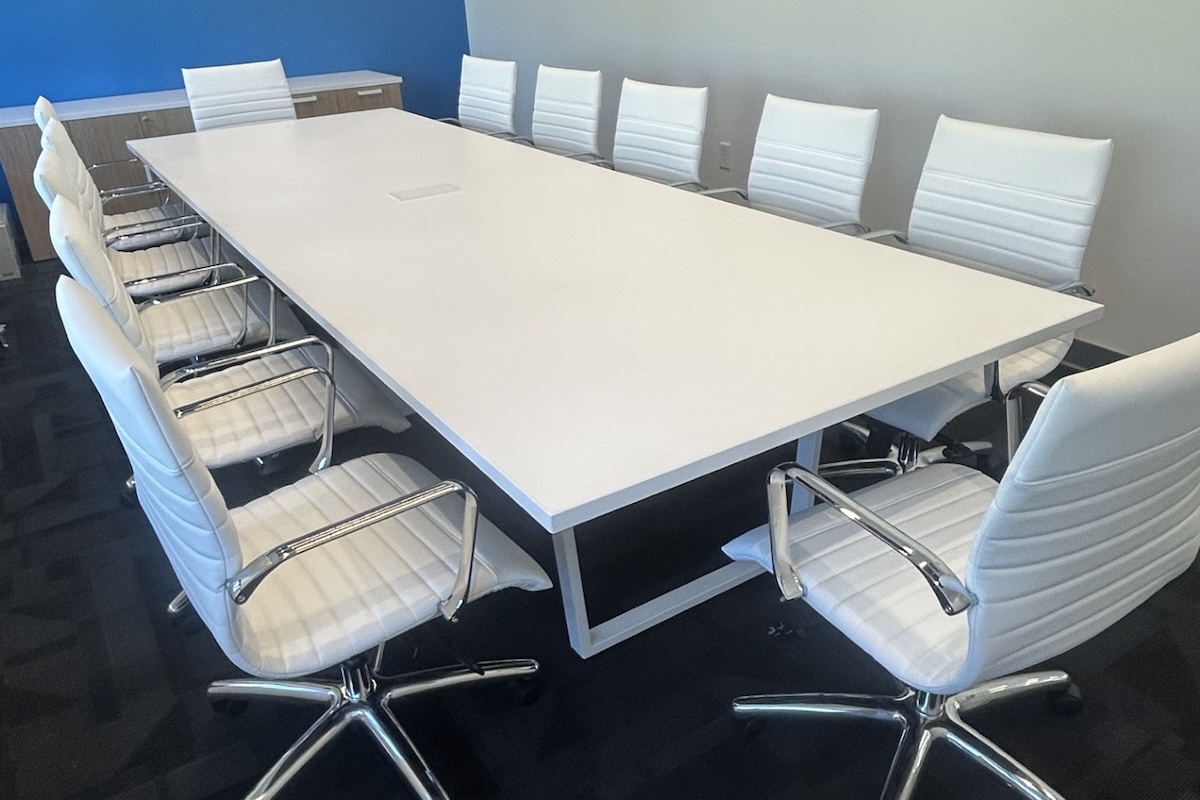
A Complete Project — No Questions Left Unanswered
The installation team arrived, did the work, and left a finished space behind them. For an organization like BTL – actively operating, multiple segments running simultaneously, leadership attention pointed in many directions at once – an installation that creates questions is an installation that creates problems.
Jason's description of the experience was unambiguous. The team was efficient and clean, and when you walked through the space at the end, you saw a complete project. Not a project that was mostly done. Not a project with items to follow up on. Every element was in place, nothing was out of order, and nothing prompted the question of whether something should look different.
For a client who had invested significant time and trust in the design process, that walkthrough moment is where the work either holds up or reveals its gaps. At BTL, it held up. Jason was very happy with the installers, and in commercial furniture, that is not a small thing to be able to say that simply.
"I was more excited to see other people's reactions when they saw the space." — Jason Wooden, BTL
The Most Rewarding Part Wasn't His Own Reaction
Jason Wooden knew what the space was going to look like before anyone else at BTL did. He had been part of every conversation, every decision, and every iteration. By the time the installation was complete, the finished environment held few surprises for him personally.
So when asked about his first impression, his answer said something important about what he believed the project was actually for. He was more excited to watch other people see it for the first time than to experience his own reaction. That instinct, measuring the success of a workspace investment by the response of the people who would work in it every day, is exactly the lens through which the most effective workplace decisions get made.
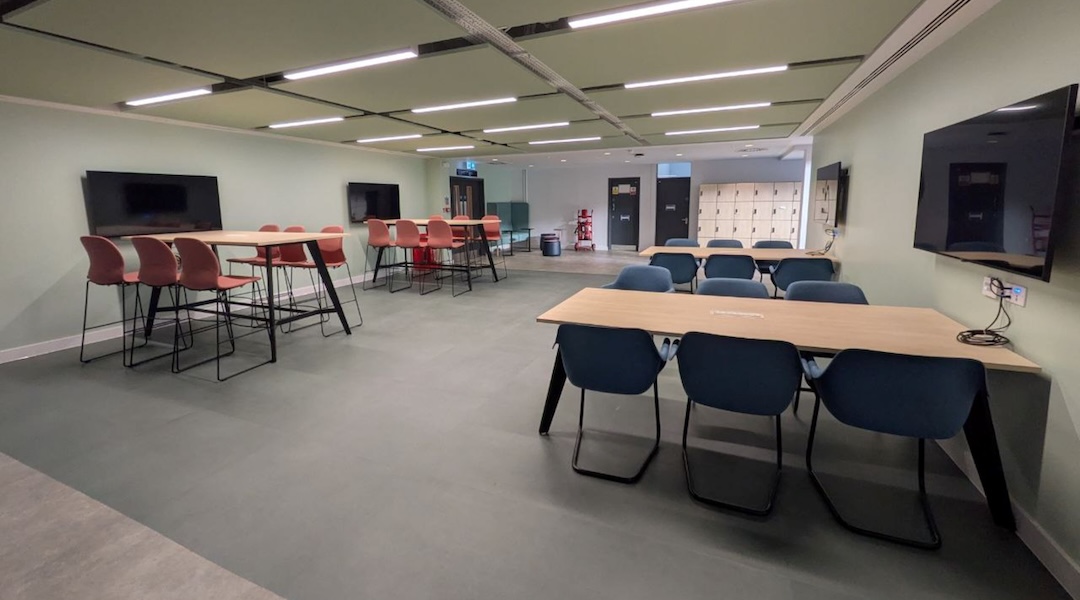
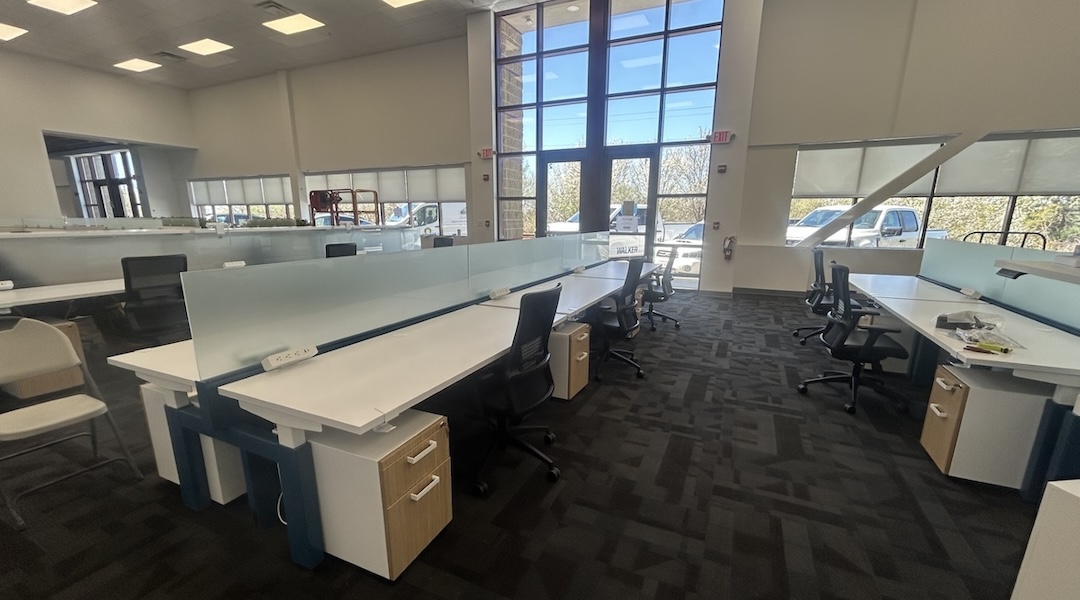
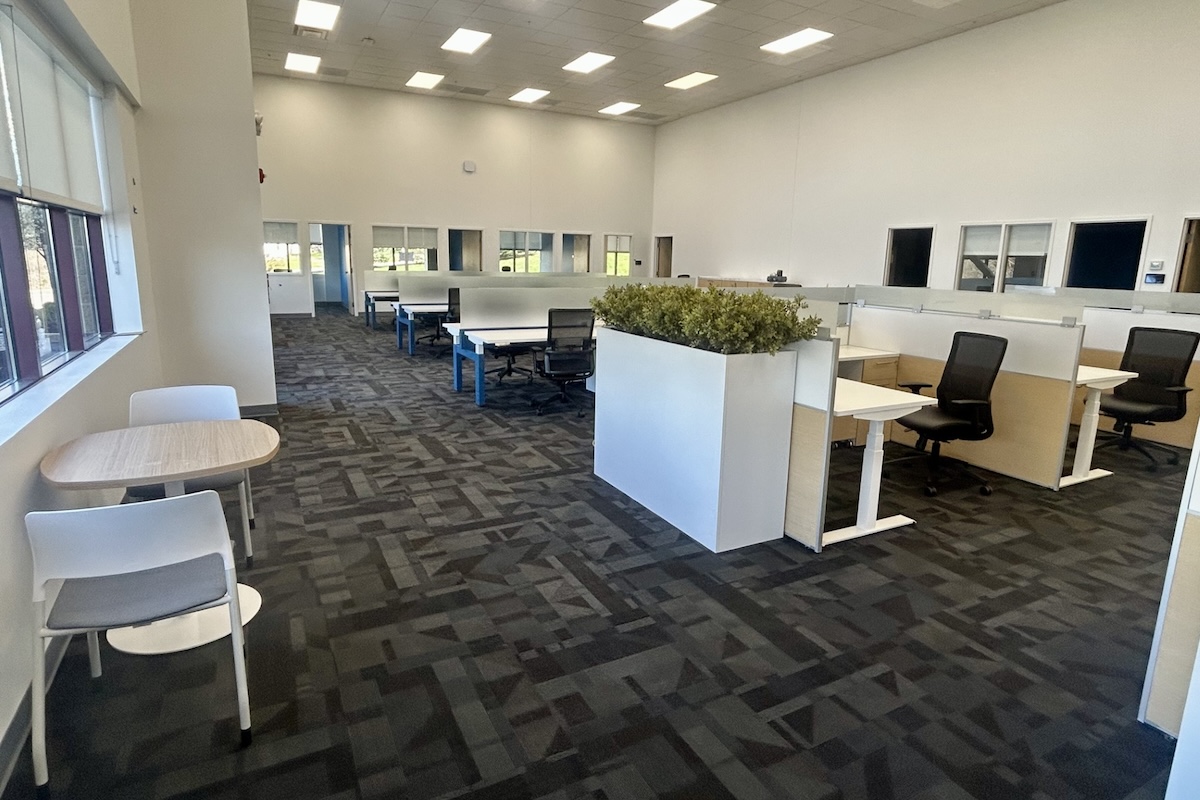
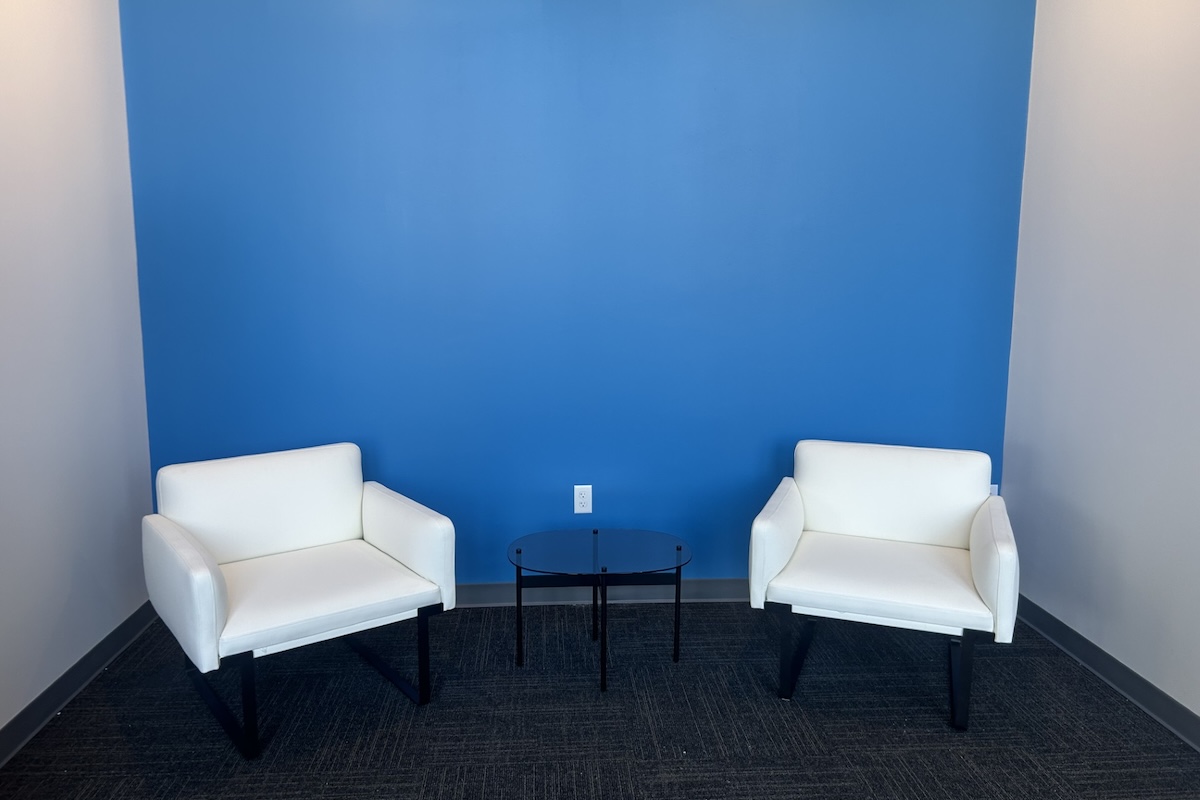
The feedback, as Jason described it, has been phenomenal. The tables, the chairs, the stand-up desks, the reception setup: each element landed well individually, and together they created an environment that reads as coherent, intentional, and genuinely comfortable. Outside vendors arriving for visits noticed it immediately. People who had not seen the space in some time walked in and were visibly impressed. When staff and guests alike arrive at the same reaction, that is not coincidence. That is design doing its job.
The collaboration outcome has been the most meaningful operational result. BTL designed the space with high collaboration as an explicit goal, not a byproduct of an open floor plan but a deliberate spatial intention. The result is that people walk by one another and connect. Conversations happen without a meeting invitation. Relationships form without a calendar block. You do not have to schedule a meeting or find an office. The space creates the conditions for the kind of human interaction that makes a team function like one.
That behavioral shift is not “an intangible.” The shift is a measurable outcome produced by a physical environment, and it is the definition of a workspace that performs.
Jason described the finished project as a moment of pride for all of them. Not for him personally, not for the leadership team alone, but for everyone who works there. A growing company had built something that reflected how far it had come and pointed clearly toward where it was going. The team felt it, and that is what the right workspace investment delivers.
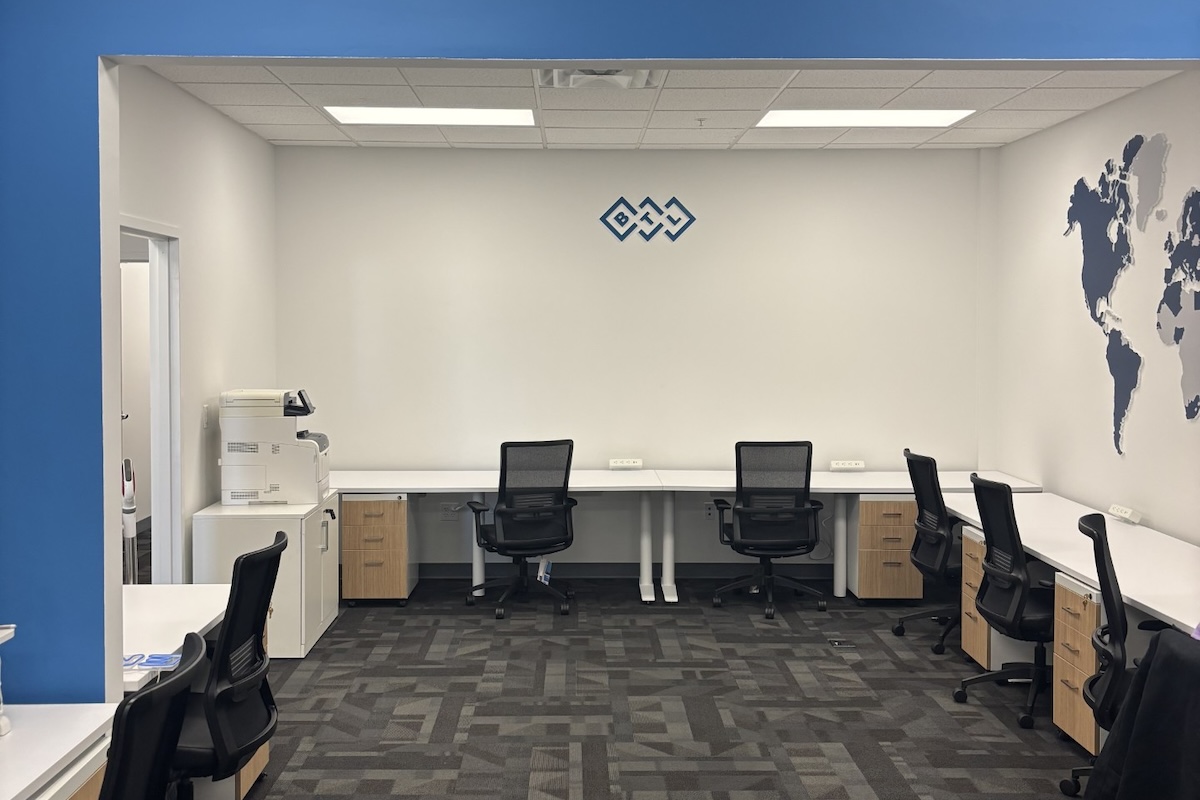
There Is No Option A and Option B
Before this project was even complete, Jason Wooden had already sent business Office Gallery's way. A contact at Amatech UEI needed chairs. Jason was asked if he knew anyone in the space and did not hesitate to make the introduction.
That referral happened before the formal testimonial, before the installation walkthrough, and before the full scope of this project had been realized. It happened because the relationship had already earned it.
When asked what he would tell another company considering a workplace transformation with Office Gallery, Jason's answer was immediate. The team, he said, is absolutely the referral when it comes to office space. If someone asks him whether he knows anyone who can help, there is no option A and no option B. He named the team specifically, calling out Molly, Mike, and Hilary by name, not the company in the abstract but the people.
That is the natural outcome of a Workplace Performance Partner relationship executed well. When a partner understands the business problem, designs to solve it, and delivers a result the entire organization feels, the referral is not a gesture. It is a conclusion.
Office Gallery brings that same approach to every client engagement across Greater Boston, from the first conversation through the finished space.
Ready to Design a Workspace That Grows With Your Team?
Office Gallery works with growing organizations across Greater Boston to plan, specify, and deliver workspaces that perform, from the first on-site consultation through space planning, product selection, and complete installation management. Every engagement starts with understanding the business problem the space needs to solve.
If your organization is outgrowing its current environment, planning an expansion, or investing in a workspace that can carry the team through its next phase of growth, the Office Gallery team is ready to help.
The right workspace partner does not just furnish an office. They deliver a result the whole team can feel.
Visit the showroom at 151 Carnegie Row in Norwood, MA: serving the Greater Boston area and all of Southeastern New England. Call the team directly at 781-762-3733.
Key Points
Why does the timing and rationale of BTL's workspace investment matter and what does it signal about how high-growth organizations should think about their office environments?
- Investing ahead of the crisis rather than in response to it as the defining characteristic of strategic workspace decisions -- BTL's decision to exercise first right of refusal on the adjacent space before the current office had failed reflects the forward-looking investment mindset that separates organizations that use their workspace as a growth tool from those that manage it as an overhead cost
- Designing for the team you are building, not only the team you have -- the workspace BTL commissioned was not sized or configured for current headcount alone; it accounted for confirmed team additions, anticipated operational areas, and a longer-term ambition that extended to the entire building; that scope of thinking changes every specification decision from a point-in-time solution to a durable infrastructure investment
- Multiple independent business segments requiring a workspace that serves autonomy and collaboration simultaneously -- designing for an organization where each segment operates independently while sharing a physical environment is a more complex brief than designing for a single unified team; the solution requires spatial clarity about where different functions work and how they connect, which is precisely the kind of brief that benefits from a design partner rather than a product catalog
- The future-proofing instinct as a competitive advantage in talent and operations -- organizations that invest in workspace ahead of the need send a signal to current and prospective employees that growth is real, planned, and backed by organizational commitment; that signal has direct implications for recruitment, retention, and the confidence of the team doing the work
- Growth from a dozen to nearly 400 people in a decade establishing the scale of the operational context -- this trajectory is not incremental; it is transformational, and the workspace demands of an organization at nearly 400 people are categorically different from those of an organization at a dozen; the investment BTL made is commensurate with the scale of the transformation they have undergone and the scale of the one they are planning
- The decision speed as a reflection of organizational clarity about the investment's value -- when the adjacent space became available, BTL moved immediately; that speed reflects an organization that already understood the value of the investment rather than one that needed to be convinced; the fastest workspace decisions are typically made by leaders who already see the office as a performance asset
What does the BTL design process reveal about what makes a workspace design engagement successful and what role does the designer's approach play?
- Converting ambiguity into a leadership-approved outcome as the core design competency -- Jason's brief was a color palette and a set of intentions; Molly's deliverable was a complete package that a CEO who had not participated in any design conversation could approve without friction; the gap between those two points is where design expertise lives, and closing it requires the designer to hold both the client's instincts and the organization's practical requirements simultaneously
- The leadership approval dynamic as a real project constraint that design must account for -- in many organizations, the person managing the workspace project is not the person who approves it; Molly understood that her work needed to satisfy two audiences, the project lead who understood the context and the senior leader who would evaluate the outcome without it; designing for that dynamic requires anticipating questions that have not been asked yet
- Seeking clarification rather than making assumptions as the professional discipline that builds trust -- a designer working with a non-linear client has two choices when ambiguity arises: make an assumption and move forward, or ask the specific question that resolves it; Molly consistently chose the latter, which meant that by the time the design was presented, it reflected the client's actual intent rather than an interpretation of it
- Availability as a dimension of professional service that clients remember -- Jason specifically noted that Molly was available whenever he needed her; in a project with a non-linear client who moves between ideas and areas simultaneously, consistent availability is not a courtesy, it is a functional requirement for keeping the project on track; clients who feel well-supported through a process become the clients who refer
- The boss not needing to be part of the process as a measure of design quality -- Jason's framing of his internal responsibility was precise: his job was to present, not to involve leadership in the journey; a design package that requires the client to explain or defend it at the approval stage has not done its job; a package that speaks for itself in the approval meeting has
- The relationship between design process quality and referral likelihood -- the referral Jason made to Amatech UEI happened before the BTL project was complete, which means it was driven by the experience of working with Office Gallery rather than by the finished result; that timeline is significant because it establishes that the process itself is a referral driver independent of the outcome
What do the employee reaction and collaboration outcomes at BTL reveal about the relationship between workspace design and organizational performance?
- Employee reaction as the primary measure of workspace investment success -- Jason's instinct to measure the project's success by watching other people's reactions rather than his own reflects a sophisticated understanding of what workspace investment is actually for; the space was not built for the leader who commissioned it, it was built for the team who would use it every day, and their reaction is the performance metric that matters
- Phenomenal feedback across every element establishing design coherence rather than isolated wins -- when feedback is positive across tables, chairs, stand-up desks, and reception setup simultaneously, it reflects a design that works as a system rather than a collection of good individual decisions; coherent positive feedback across multiple elements is harder to achieve and more valuable than strong performance in one area
- Outside vendor impressions as a secondary performance metric with business implications -- the fact that vendors who had not visited in some time walked in and were visibly impressed establishes that the workspace is performing a brand function as well as an operational one; the impression the office makes on external visitors is a direct reflection of organizational quality that clients and partners register even when they do not articulate it
- Spontaneous collaboration without scheduling as the behavioral outcome that design made possible -- the specific collaboration improvement Jason described, people walking by one another and connecting without a meeting invitation or office search, is not a cultural outcome; it is a spatial outcome produced by a layout that was deliberately designed to create those conditions; culture can encourage collaboration but only design can make it effortless
- The human dimension of workspace design connecting physical environment to organizational belonging -- Jason's observation that the space supports the human aspect of work, the relationships, bonds, and camaraderie that form when people can interact naturally, positions workspace design as a contributor to the organizational belonging that research consistently identifies as a primary driver of retention and engagement
- Organizational pride as a measurable output of workspace investment -- Jason described the finished project as a moment of pride for everyone who works there; pride in the physical environment is not a soft outcome; it is a tangible signal to employees that the organization invests in their daily experience, which directly affects the engagement and retention outcomes that workspace investment research documents
What does the BTL referral pattern reveal about how Workplace Performance Partner relationships develop and what distinguishes them from transactional vendor relationships?
- The pre-completion referral as the strongest possible signal of relationship value -- a referral made before a project is complete is a referral made on the basis of the experience of working with a partner rather than on the finished result alone; that timing establishes that the value Jason perceived in the Office Gallery relationship was present throughout the engagement, not only at the end of it
- Naming individuals rather than the company as a signal of relationship depth -- Jason named Molly, Mike, and Hilary specifically; that level of specificity in a referral reflects genuine relationship investment rather than general satisfaction with an organizational brand; clients who refer at the individual level are clients whose experience was shaped by specific people rather than by a company-level service standard
- The no option A and no option B framing as the clearest possible expression of referral confidence -- this is not a qualified endorsement; it is an unambiguous statement that there is no consideration of alternatives when the question of office space comes up in Jason's professional network; that level of referral confidence is the outcome of a relationship that delivered on every dimension the client valued
- The connection between design process quality and referral behavior -- because the Amatech UEI referral happened before project completion, it was driven primarily by Molly's design process and the experience of working with the team rather than by the finished installation; this establishes that referral-generating relationships are built through the engagement process, not only through the delivered outcome
- Workplace Performance Partner relationships producing ongoing business rather than single transactions -- Jason's closing comment that BTL has other small projects coming up and his clear expectation that Office Gallery will be involved reflects the natural trajectory of a relationship that delivered genuine business value; transactional vendor relationships end at project completion, partner relationships continue into the next one
- The referral as the fullest expression of the Workplace Performance Partner value proposition -- the most credible signal that a workspace partner delivered real business value is that the client refers other businesses without being asked; Jason's referral to Amatech UEI and his unambiguous endorsement when asked about future recommendations are the outcomes that the Workplace Performance Partner positioning exists to produce
How does the BTL project demonstrate the full scope of what Office Gallery delivers and what should Greater Boston organizations take from this story?
- The complete project arc from ambiguous brief to leadership-approved design to clean installation to phenomenal employee outcome -- the BTL story covers every phase of a workspace engagement from the initial design challenge through the finished result and its organizational impact; that complete arc is the demonstration of what end-to-end project management actually means in practice
- The Workplace Performance Partner approach producing outcomes that go beyond the furniture -- the tables, chairs, stand-up desks, and reception setup are the vehicles; the phenomenal employee feedback, the spontaneous collaboration, the organizational pride, and the referral are the outcomes; the distinction between the two is what separates a furniture purchase from a workspace investment
- Growing organizations as the client profile that benefits most from forward-looking workspace design -- BTL's trajectory from a dozen to nearly 400 people and their ambition to take over an entire building is not unique in Greater Boston's high-growth business community; organizations at every stage of that trajectory face the same core challenge of designing for a future they can only partially see, and the right design partner makes that challenge navigable
- The design process as a service in its own right, not only a path to a product -- Jason's description of working with Molly, the availability, the clarification-seeking, the ability to handle a non-linear client and deliver something a CEO could approve without friction, reflects a design service standard that is independent of the furniture it specifies; that service is what clients pay for and what they refer
- On-site consultation, space planning, and end-to-end project management as the practical offering behind the partnership -- Office Gallery's service model covers the full engagement from the first conversation through the finished space, which is what made it possible to take Jason's color palette and intentions and deliver something his entire organization is proud of
- Contact Office Gallery at 781-762-3733 or visit the showroom at 151 Carnegie Row in Norwood -- serving Beverly, Marlborough, Plymouth, Quincy, Waltham, the Greater Boston area, and Southern New England since 1989, Office Gallery works with organizations at every stage of growth to build workspaces that perform; if your business is outgrowing its current environment or planning its next phase of expansion, the conversation starts here