Unassigned Seating: Coming Soon to an Office Near You
Unassigned seating revolutionizes office design with flexible workspaces that reduce costs by 30% and space needs by 15–40%. Office Gallery's hoteling solutions feature benching systems, modular furniture, and collaboration zones that adapt to hybrid work. Transform your office with strategic furniture choices that boost efficiency.
Post Summary
Unassigned seating, or hoteling, creates hotel lobby-style offices with various seating options instead of individual desks. It’s trending as 54–60% of companies now use it to support hybrid work and reduce office space by 15–40%.
Companies can reduce operating costs by up to 30% and save millions annually by optimizing real estate and reducing desk-to-employee ratios.
Benching systems, modular desks, collaboration tables, and flexible seating are ideal. Office Gallery offers customized solutions, including private offices and full-panel workstations.
Adaptation varies—some embrace it quickly, others need time. Success requires workspace variety, clear ground rules, booking systems, and training on etiquette.
Office Gallery provides on-site consultations, custom space planning, project management, and access to hundreds of manufacturers, ensuring seamless transitions.
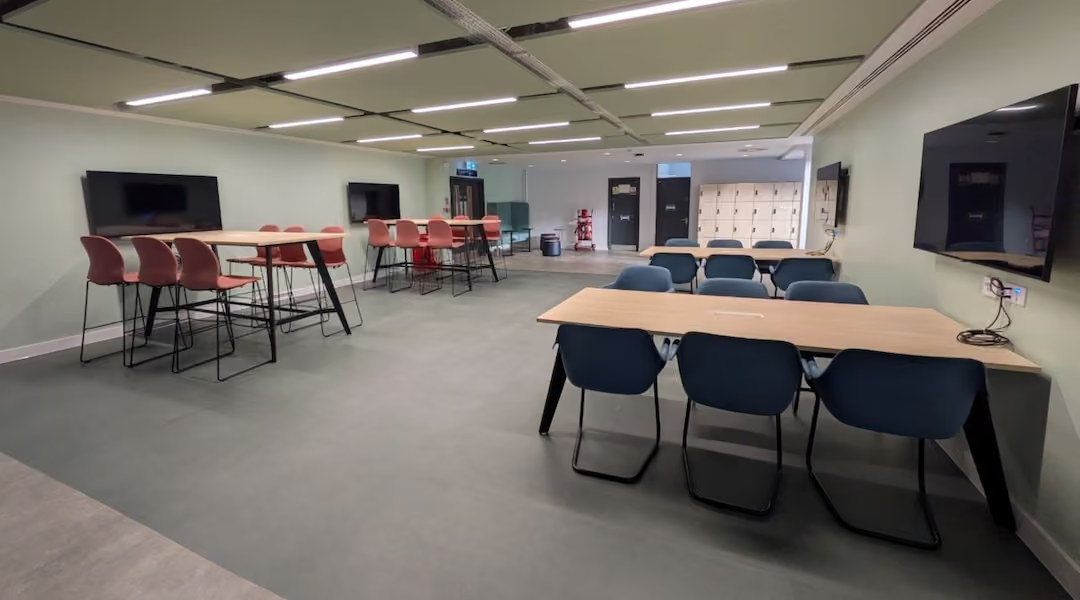
Earlier in the year we talked about new trends in corporate work spaces with specific mention to “hoteling,” or the idea of replicating a hotel lobby – creating an open floor plan with different types of seating groupings – a sofa on one side of the room, round tables with chairs on another, high tops and bistro seating in one corner, and booths in another. Noticeably absent in this type of work environment are individual desks – and according to a recent Wall Street Journal article (“Don’t Get Too Used to Your Own Desk,” Sue Shellenbarger, May 15, 2018), this is a trend that more and more bigger corporations are applying.
New designs in office furniture certainly make these work landscapes not only possible, but potentially more productive too.
Benching Systems
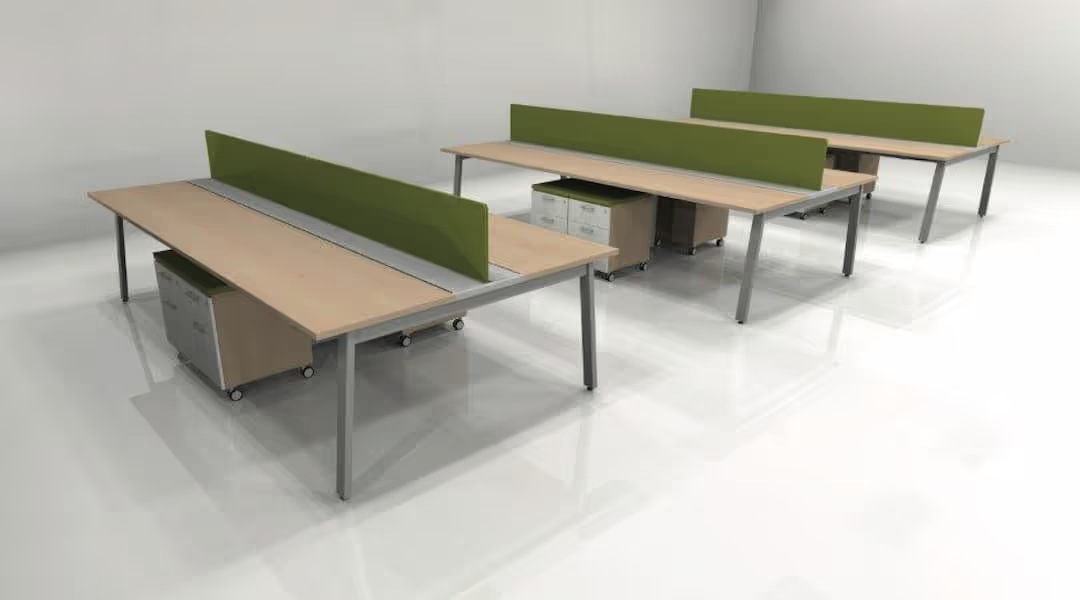
Benching systems are open-concept workstations generally used for quick “touchdowns” (employees coming into the office for a limited time). Although benching systems offer minimal privacy, they are designed specifically with collaboration in mind. And with their clean lines and built-in wires that stay hidden, they look good too!
In an unassigned desk setting, benching systems work well as a main staple with a combination of full-panel work stations (semi-private spaces that include some acoustic considerations through the use of paneling and tack boards, feature storage options such as upper hutches or lower filing cabinets, and provide increased work surfaces) and even private office spaces (whether previously existing as a result of the original construction, or created by using floor-to-ceiling panels that offer an enhanced adaptability of any space). These different settings allow employees the option of where to work based on what they’re working on – and whether they need a small, quiet space of their own or are looking to brainstorm and collaborate with their co-workers.
Preparing Your Workforce for Change
If your organization makes the decision to forego individual desks, the article suggests that you be ready to allow for some time for employees to get used to the new working arrangements, and environment. Implement training so that people can discuss and understand the ground rules of these new shared spaces (which might cover issues such as noise levels and cleanliness, for example). Also recognize that while some employees might take to the change right away, others may need some time getting used to shared spaces – and some might never fully embrace the change.
One of the side benefits of unassigned seating is a decrease in paper usage. With no individual desk filing cabinet, or specific desk on which to pile things up, more employees tend to shift toward digital storage, which not only reduces the need for space, but also reduces printing and paper costs.
Speaking of space, companies that have shifted to this approach have realized significantly less need for square footage. Filing capacity is one of the reasons; also, many people in this situation also have the option of working remotely, and more employees start taking advantage of this opportunity.
With the variety of seating options and office furniture available today, companies that decide to go the route of unassigned seating can be better positioned for success based on their furniture choices. Talk to us at Office Gallery about all of your workplace questions, and we can help design a space that makes sense for your organization.
Key Points
How does unassigned seating transform traditional office layouts and what are the key components?
- Unassigned seating reimagines office design by eliminating individual desks and creating flexible, hotel lobby-inspired environments.
- Diverse seating arrangements: Sofas, round tables, high tops, bistro seating, and booths.
- Benching systems: Open-concept workstations for quick “touchdowns” and collaboration.
- Mixed privacy levels: Combines full-panel workstations, private offices, and open zones.
- Activity-based zones: Spaces for focus, collaboration, relaxation, and meetings.
- Modular furniture: Easily reconfigurable desks, storage, and seating.
- Technology integration: Desk booking systems and real-time availability tracking.
- Result: Employees choose work locations based on tasks, not assigned desks.
What are the proven financial benefits and ROI of implementing unassigned seating solutions?
- Operating cost reduction: Up to 30% savings in office expenses.
- Real estate savings: 15–40% reduction in required office space.
- Concrete examples:
- IBM saved up to $100M annually.
- American Express saved $10–15M per year.
- Deloitte reduced office space by 30%.
- Space utilization: Increases from 50% (traditional) to 80% (unassigned).
- Scalability: Easier expansion/contraction without major build-outs.
- Desk-to-employee ratios: Target 1.3–1.7 employees per desk.
- Additional savings: Less paper use as employees shift to digital storage.
Which specific furniture products and solutions does Office Gallery International offer for unassigned seating implementation?
- Benching systems: Open workstations for collaborative, flexible use.
- Modular desk solutions: Adjustable, reconfigurable desks for all team sizes.
- Flexible seating collection: Ergonomic chairs, guest seating, and specialty options.
- Collaboration furniture: Tables for group work and meetings.
- Multi-purpose furniture: Sofas, ottomans, and adaptable pieces.
- Storage solutions: Modular units that change with organizational needs.
- Lounge and relaxation furniture: For informal collaboration and well-being.
- Quick turnaround products: Rapid delivery for fast transitions.
- Private office integration: Full-panel workstations and private spaces.
- Unique advantage: Access to hundreds of manufacturers for custom solutions.
What comprehensive services does Office Gallery International provide to ensure successful unassigned seating implementation?
- Expert consultation: On-site assessments and custom space planning.
- Collaboration zone design: For optimal interaction and productivity.
- Project management: End-to-end oversight from consultation to installation.
- Design and visualization tools: Showroom, 3D modeling, and space planning software.
- Industry expertise: Over three decades of experience across sectors.
- Result: Seamless transformation with minimal disruption and maximum benefit.
What are the current industry trends and adoption rates for unassigned seating, and how do they support business decisions?
- Rapid growth: 54–60% of North American companies use desk sharing/hoteling.
- Hybrid work alignment: 87% of employees work in hybrid models.
- Regional adoption: Oceania (81%), Europe (68%), Asia (37%), North America (35%+).
- Space optimization: Two-thirds plan to reduce office space by 25%+ in 18 months.
- Technology integration: 64% prioritize desk/room booking software.
- Employee experience: 94% of high-performing offices offer workspace choice.
- Conclusion: Early adoption is a competitive advantage.
How can organizations overcome employee resistance and ensure successful adoption of unassigned seating systems?
- Address concerns: Provide lockers, personal storage, and robust cleaning protocols.
- Workspace variety: Mix of quiet rooms, collaboration zones, and phone booths.
- Technology and governance: Use booking systems, real-time tracking, and clear rules.
- Transition support: Allow time for adjustment, offer training, and pilot programs.
- Employee satisfaction: Offices with variety see 25% higher satisfaction and 85% productivity.
- Best practice: Regular feedback and iteration ensure ongoing success.