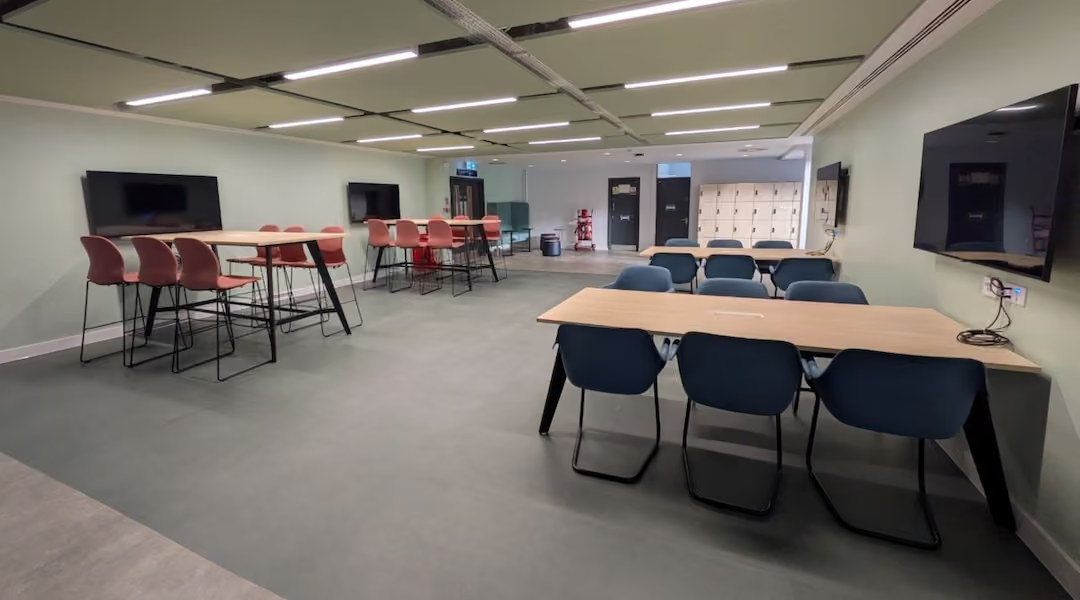

Office Furniture Design to Keep Employees Safe
Discover how strategic office furniture design keeps employees safe and productive. From ergonomic chairs to sit-stand desks, learn the essential safety features that reduce workplace injuries by up to 60%. Office Gallery International's certified experts provide tailored solutions that comply with BIFMA standards while boosting employee wellness and business performance.
Post Summary
Ergonomic design with adjustable features, BIFMA certification for structural integrity, and proper support for natural body alignment.
Adjustable ergonomic chairs with lumbar support, sit-stand desks for movement variety, and anti-fatigue mats for standing workers.
BIFMA G1-2013 is the industry standard ensuring office furniture meets safety, durability, and ergonomic requirements for computer workspaces.
Proper ergonomic support reduces fatigue, prevents musculoskeletal injuries, and keeps employees comfortable and focused throughout the workday.
Height adjustment, lumbar support, armrest positioning, and stable base with smooth casters to prevent falls and strain.
Our CEO, Michael Troia, was featured on the Radio Entrepreneurs show sharing his expertise on a timely topic: how your office furnishings can help keep employees safe and healthy.
As you look to reopen your office and keep employees and clients safe, Office Gallery is here to help. Get in touch today.
Key Points
How does ergonomic office furniture design prevent workplace injuries and boost employee productivity?
- Injury Prevention Benefits:
- Reduces musculoskeletal disorders (MSDs) by 40–60% through proper spinal alignment and joint support
- Prevents repetitive strain injuries with adjustable positioning for individual body mechanics
- Eliminates pressure points that cause circulation issues and nerve compression
- Minimizes eye strain and neck pain via optimal monitor positioning and viewing angles
- Productivity Enhancement:
- Increases focus and concentration by eliminating physical discomfort distractions
- Reduces fatigue through proper weight distribution and support
- Enhances cognitive performance by improving blood flow and reducing stress hormones
- Decreases absenteeism by up to 25% through improved employee health and comfort
- Key Design Elements:
- Adjustable lumbar support for the spine’s natural S-curve
- Height-adjustable work surfaces for sitting and standing
- Armrests positioned to support elbows at 90°
- Stable bases and smooth casters for safe movement
What are the essential BIFMA safety standards that office furniture must meet, and why does compliance matter?
- Core BIFMA Standards:
- BIFMA G1-2013 Ergonomics Guideline for computer workstations
- ANSI/BIFMA X5.1 for general purpose office chairs (structural integrity and safety)
- ANSI/BIFMA X5.5 for desk products (load capacity, stability, durability)
- ANSI/BIFMA X5.11 for advanced commercial-grade chair safety
- Why BIFMA Compliance Matters:
- Legal Protection: Meets OSHA requirements, reduces liability
- Quality Assurance: Rigorous testing for structural integrity and longevity
- Employee Safety: Significantly reduces risk of furniture-related injuries
- Cost Effectiveness: Higher durability, lower replacement costs, better ROI
- Insurance Benefits: Potential for reduced premiums
- Testing Requirements:
- Load testing up to 5x normal use
- Durability cycles simulating years of use
- Chemical emissions testing for air quality
- Ergonomic validation via human factors research
Which specific office furniture solutions provide the highest return on investment for employee safety and wellness?
- Ergonomic Task Chairs (ROI: 300–500%)
- Features: Height adjustment, lumbar support, armrest positioning, breathable materials
- Benefits: 45% reduction in back pain claims, 30% productivity increase
- Height-Adjustable Sit-Stand Desks (ROI: 250–400%)
- Features: Electric/manual adjustment, memory settings, cable management
- Benefits: 60% reduction in sedentary-related health issues, improved energy
- Ergonomic Accessories Package (ROI: 200–350%)
- Includes: Monitor arms, keyboard trays, footrests, document holders
- Benefits: 40% reduction in repetitive strain injuries
- Anti-Fatigue Mat Systems (ROI: 150–250%)
- Features: Cushioned, non-slip surfaces for standing workers
- Benefits: 25% reduction in lower extremity discomfort
- Measurable Business Impact:
- Healthcare cost reduction: $1,500–$3,000 per employee annually
- Productivity gains: 15–25% improvement in task completion
- Retention improvement: 20% reduction in turnover due to discomfort
How does Office Gallery International's consultation process ensure optimal office safety design for different business needs?
- Phase 1: Assessment & Analysis
- On-site ergonomic evaluations with professional tools
- Workflow analysis to identify high-risk tasks
- Employee surveys for comfort and safety feedback
- Space utilization studies for optimal layout
- Phase 2: Customized Design Solutions
- Industry-specific recommendations
- BIFMA-certified product selection
- 3D space planning for optimal placement and flow
- Budget optimization for maximum safety ROI
- Phase 3: Implementation & Support
- Professional installation and adjustment
- Employee training on ergonomic best practices
- Follow-up assessments at 30, 60, and 90 days
- Ongoing support for adjustments and upgrades
- Specialized Industry Expertise:
- Healthcare, financial services, manufacturing, education
- Value-Added Services:
- Ergonomic training for HR/safety teams
- Compliance documentation for OSHA/insurance
- Wellness program integration
- Sustainability consulting for eco-friendly options