How Science Is Influencing Office Design
Scientific research proves office design directly impacts productivity and employee wellness. Learn how ergonomic furniture reduces absenteeism by 67%, acoustic solutions eliminate distracting noise, and evidence-based workspace design increases creativity by 15%. Explore Office Gallery's science-backed furniture solutions.
Post Summary
Overheard conversations are highly distracting. Sound masking systems and acoustic furniture panels create diverse environments, improving focus and work quality.
Ergonomic solutions cut absenteeism by 67%, boost productivity by 15%, and increase job satisfaction by 24%, making them a smart investment.
Blue stimulates focus, green enhances concentration, and orange promotes decision-making. Strategic color use in furniture and design optimizes work zones.
Biophilic features like plants and natural light increase productivity by 6%, creativity by 15%, and well-being by 15%, while reducing stress.
Open layouts, wellness spaces, and sit-stand desks encourage movement, reduce health risks, and increase satisfaction by 24%.
Another recent Wall Street Journal article, “How Neuroscience Is Optimizing the Office” (John Medina and Ryan Mullenix, May 1, 2018), shares the findings of an award-winning architectural firm and a molecular biologist who team up to research the office environment. While some of their findings may seem self-evident on a more general level, the idea of taking similar concepts that we know to be important personally and applying them to the work environment is encouraging many office designers to take a fresh look at certain decisions and selections.
Noise Can Lower Productivity
One of their biggest findings hinged on the impact of noise in the working environment. Voices that are over a certain decibel level and even those that may not be but are engaged in “halfversations” – where a person hears only half of someone’s conversation (if that person is on the phone, for example) – are especially distracting and damaging to overall office productivity. To combat these noise nuisances, the authors suggest “sonically diverse environments” to keep collaborative work spaces working, but more private or traditional desk areas quieter.
There are a lot of options when it comes to sound masking efforts in the office. Some furniture pieces have sound masking features that are built right in and can either be employed or stowed when not needed, allowing private conversations to stay private. Sound masking panels are also a great way to add color and emphasize your branding while keeping overall noise in check. Another great option focuses on the importance of soothing background noise. LogiSon® Acoustic Network is an award-winning sound masking system that reduces noise in office environments and works especially well in wide open spaces with higher ceilings. This system distributes a soft ambient sound throughout a facility, masking frequencies in speech, which helps to increase privacy and reduce disruptions, while also covering incidental noises that can affect comfort and concentration. The sound can also be customized for different areas throughout an office depending on the needs.
…But Open Offices Help Creativity Spread
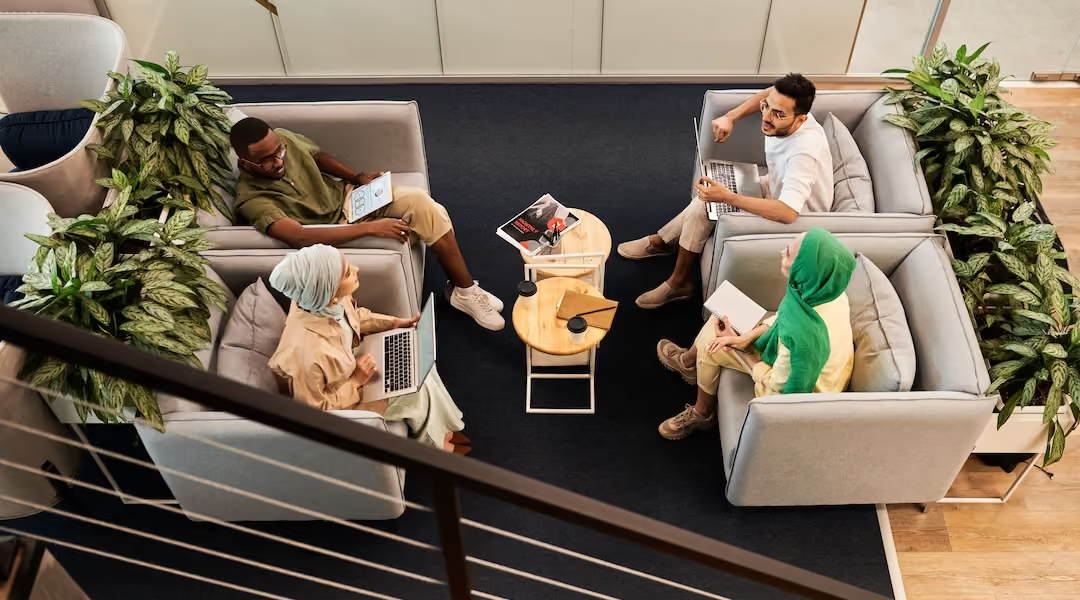
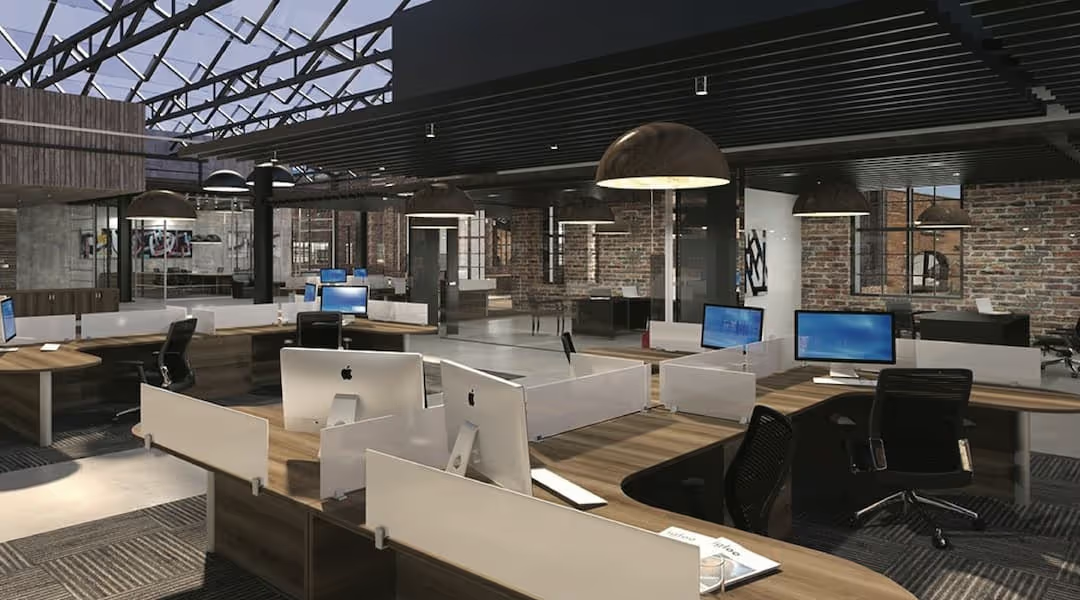
Although noise is of special concern in more open spaces, the authors did note that these types of spaces – which many businesses have been outfitting with benching systems and a range of alternative seating options in small group clusters – foster more creative thinking. Colors also have a big impact on the office environment, but for some reason – as much as we might add it to our homes – the emphasis on color becomes seemingly forgotten once we step into an office. Adding specific colors – “blue for stimulation, green for focus…orange for decision-making” – cannot only help motivate and enhance employees’ efforts but can also be strategically aligned with a company’s own brand, allowing for the visual reflection of the company directly in the office, and offering a striking difference from your competition, which current and prospective clients will notice when they come to visit. And now that so many furniture pieces come in a range of color options – including sound masking panels, storage doors, and chairs – it’s easier than ever to incorporate these colors throughout the environment.
For many, a focus on a healthy lifestyle is important, but only recently is this being carried over into the office environment. Yet helping to keep employees healthy is not only the right thing to do, but also makes sense from financial and overall operational points of view. Office design can help be a part of this too – incorporating more open spaces that encourage walking back and forth to talk with someone and creating other spaces within the office specifically designated for employees to take a stretching or yoga break (for example). Adding a variety of sit-stand desks is also a great way to make sure your workforce has the option to move around more throughout the day, even on the busiest of days.
A more focused workforce is a healthier and more productive workforce. Select furniture pieces, designs, and technologies can help enhance the workplace environment to achieve these goals.
Key Points
How Does Acoustic Research Drive Sound Masking and Noise Reduction Solutions in Modern Offices?
- Scientific Foundation:
- Overheard conversations (“halfversations”) are 50% more distracting than other office noises.
- Noise distractions can cause up to 67% productivity loss.
- Office Gallery Solutions:
- LogiSon® Acoustic Network and sound masking furniture panels.
- Customizable acoustic workstations and color-coordinated panels.
- Business Benefits:
- Immediate reduction in distractions and improved focus.
- Long-term ROI through lower absenteeism and higher retention.
- Measurable improvements in productivity and employee satisfaction.
- Immediate reduction in distractions and improved focus.
What Scientific Evidence Supports Ergonomic Furniture Investment for Workplace Health and Productivity?
- Scientific Foundation:
- Ergonomic interventions reduce absenteeism by 67% and increase productivity by 15%.
- Sit-stand desks and modular workstations support diverse work styles.
- Office Gallery Solutions:
- Adjustable sit-stand desks, ergonomic chairs with lumbar support, and modular workstations.
- Products certified by BIFMA, ANSI, and ISO for ergonomic performance.
- Business Benefits:
- Reduced health risks and musculoskeletal disorders.
- Higher job satisfaction and performance.
- Lower occupancy costs by 20–30%.
How Do Biophilic Design Principles Create Measurable Wellness Benefits in Office Environments?
- Scientific Foundation:
- Biophilic elements (plants, natural light) increase productivity by 6%, creativity by 15%, and well-being by 15%.
- Optimal green coverage ratio is 12% for maximum benefit.
- Office Gallery Solutions:
- Indoor plants, natural materials, green wall systems, and nature-inspired furniture.
- Business Benefits:
- Reduced stress and improved air quality.
- Enhanced employee engagement and satisfaction.
- Stronger organizational commitment.
What Role Does Circadian Lighting Science Play in Office Design and Employee Performance?
- Scientific Foundation:
- Proper lighting (300–500 lux, 5000–17,000K for alertness) supports circadian rhythms, alertness, and sleep quality.
- Dynamic, tunable LED systems improve well-being and productivity.
- Office Gallery Solutions:
- LED task lighting, layouts maximizing natural light, and tunable lighting systems.
- Business Benefits:
- Reduced eyestrain and fatigue.
- Improved focus, mood, and cognitive performance.
- Higher employee satisfaction.
How Does Color Psychology Research Translate into Strategic Office Design Decisions?
- Scientific Foundation:
- Blue stimulates mental activity, green enhances concentration, orange promotes decision-making.
- Office Gallery Solutions:
- Color-coordinated furniture, accent walls, and branded design elements.
- Business Benefits:
- Optimized work zones for specific tasks.
- Reinforced company branding and culture.
- Increased employee engagement and performance.
What Scientific Research Supports Flexible Space Design for Hybrid Work Models?
- Scientific Foundation:
- Flexible, modular layouts reduce occupancy costs by 20–35% and support hybrid work.
- Activity-based working aligns with diverse cognitive patterns and preferences.
- Office Gallery Solutions:
- Modular furniture systems, collaborative zones, quiet focus areas, and technology integration.
- Business Benefits:
- Adaptable spaces for changing needs.
- Enhanced collaboration and focus.
- Future-proof investment and real estate savings.