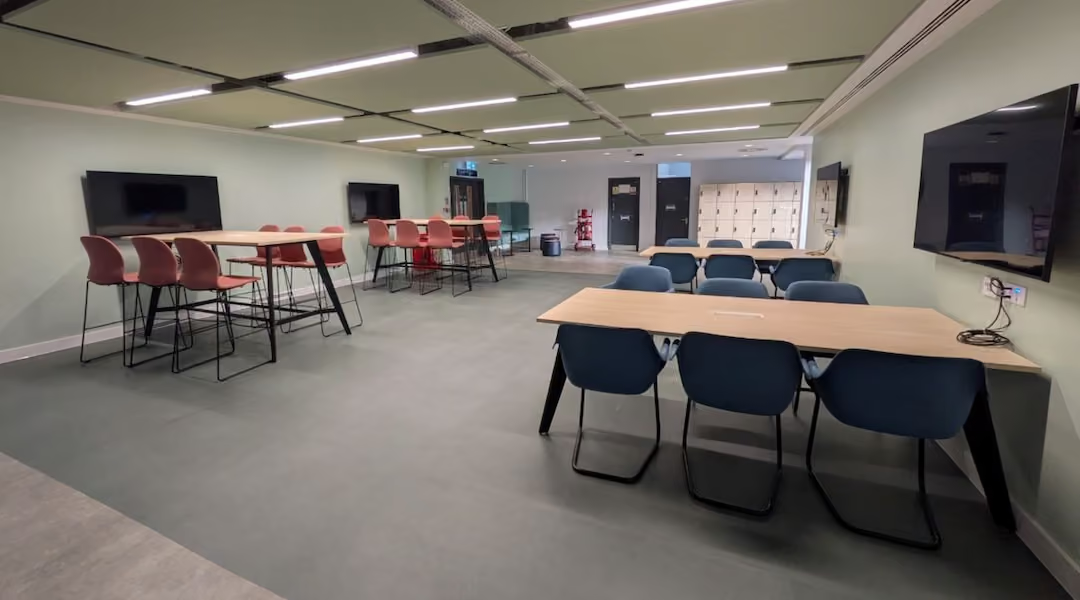

How Office Lighting Affects Employee Mood
Workers with good daylight access are 77% less likely to report feeling depressed — and lighting below 300 lux increases eye strain and headaches. The best office lighting uses daylight first, then adds layered artificial light by work zone with dimmers, tunable LEDs, and task lighting to reduce strain and support energy across the workday.
Post Summary
Office lighting affects employee wellbeing through two distinct pathways: circadian rhythm regulation and visual comfort. On the circadian side, bright light above 1,000 lux during the day measurably improves alertness and performance by suppressing melatonin, while dim light below 100 lux — where many office workers spend significant portions of their day — increases the risk of circadian misalignment, sleep disruption, and workplace tension. On the visual comfort side, glare, screen reflections, uneven brightness, and light levels below 300 lux increase eye strain and headaches, reduce focus, and make sustained concentration progressively harder as the day advances. Workers with good daylight access are 77% less likely to report feeling depressed than those in poorly lit offices.
Daylight provides the strongest mood support of any light source and is the primary signal that keeps the body's circadian clock synchronized with the day-night cycle. Special light-sensitive cells in the eye detect daylight and send signals to the brain's master clock, regulating melatonin levels and daytime alertness through non-visual pathways. The practical implication for office design is significant: placing desks within 20 feet of windows, using glass partitions instead of solid interior walls to allow daylight to penetrate deeper into the floor plate, and using electrochromic glass to manage glare without blocking light are all strategies that prioritize daylight as the foundation of the lighting plan. Fixed shades that remain closed eliminate the benefit daylight provides and leave work areas relying entirely on artificial light.
Tunable LEDs are lighting fixtures that can shift their color temperature across the workday, mimicking the natural progression of daylight from morning to evening. Cooler tones at 4,600K and above support alertness in the morning when employees need to feel awake and focused. Warmer tones around 3,000K or below are appropriate later in the day and in meeting rooms where a calmer, less stimulating atmosphere supports conversation and collaboration. Fixed fluorescent or standard LED panels cannot make these shifts, which is why they tend to feel rigid and inadequate as the office's functional requirements change from hour to hour across the workday. Tunable LEDs are particularly valuable in windowless areas, on cloudy days, and after hours when natural daylight cannot perform its circadian regulation function.
Layered office lighting combines three distinct light types, each serving a different function. Ambient lighting provides general room illumination through dimmable overhead fixtures — dimming is important because it allows the ambient layer to ease back when daylight is strong rather than adding unnecessary light that creates glare and visual fatigue. Task lighting places focused light at individual workstations, supporting screen work and document review without requiring the overhead ambient system to be turned up for everyone in the space. Accent lighting manages contrast by softening the sharp brightness transitions between areas — such as the jump between a bright window and a dark adjacent wall — that force the eyes to constantly readjust and contribute to fatigue over the course of the day. Used together, these three layers create an office environment that adapts to different activities and times of day rather than imposing a single fixed light level across all conditions.
The most common office lighting problems are glare from overhead fixtures or windows creating screen reflections, uneven brightness with dark corners and sharp transitions between bright and dim areas, and overall light levels that are too low for the visual demands of sustained desk work. A simple glare audit — sitting at different desks at different times of day and observing screen reflections and fixture positions — identifies the worst trouble areas. Fixture repositioning, diffusers, and matte screen protectors address most glare problems. Task lamps, LED replacement of older fluorescents, and accent lighting in dark corners address uneven brightness. Dimmers and occupancy sensors provide ongoing control that allows the lighting system to adapt to changing conditions rather than requiring manual intervention throughout the day. For organizations not ready for a full overhaul, replacing fluorescents with LEDs and adding task lamps and dimmers to the most heavily used areas provides meaningful improvement at relatively low cost.
Office lighting can change how people feel, focus, and work. Good daylight, lower glare, and better light control can help cut eye strain, headaches, and that mid-afternoon slump. This article’s main point is simple: the best office setup uses daylight first, then adds layered artificial light where needed.
Here’s the short version:
- Daylight helps mood the most. One study cited in the article says workers with good daylight access were 77% less likely to report feeling depressed.
- Light affects the body clock. Bright daytime light can help people feel more awake by lowering melatonin.
- Dim light can drag people down. Many workers spend time in spaces under 100 lux, far below daylight.
- Low light and poor contrast hurt comfort. When lighting drops below 300 lux, eye strain and headaches can go up.
- Glare and flicker are common problems. They can lead to sore eyes, headaches, and trouble focusing.
- Tunable LEDs help when daylight is weak. Cooler light in the morning and warmer light later in the day can better match the workday.
- Layered lighting works best. That means:
- Ambient light for general room lighting
- Task light for desk work
- Accent light to soften dark spots and sharp contrast
- Control matters. Dimmers, occupancy sensors, daylight sensors, and desk-level controls let people fine-tune their space.
If we had to sum up the full article in one line, it would be this: better office lighting means more comfort, steadier energy, and a better mood across the day.

So if you want the plain-English takeaway: don’t rely on one harsh overhead light for the whole office. Give people daylight where possible, add desk lighting where needed, and make the system easy to control.
How Lighting Affects Employee Mood and Energy
Light shapes alertness, focus, and mood all day long. It does that in two main ways: by influencing the body clock and by changing visual comfort.
Light, Circadian Rhythm, and Daily Alertness
Your body runs on an internal clock called the circadian rhythm. Light is the main signal that keeps that clock lined up with the day-night cycle. Special light-sensitive cells in the eye detect light and send signals to the brain's master clock. [3]
Bright morning light lowers melatonin and helps employees feel more awake. [3] Research suggests that bright light above 1,000 lux during the day can improve both self-reported alertness and measured performance. [3]
"Light during the day is essential for proper synchronization of the body's circadian clock with the environmental light-dark cycle." - PLOS One [3]
Here’s the problem: many employees spend long periods in lighting below 100 lux, which is much dimmer than daylight. [3] When lighting quality is poor, the risk of circadian misalignment, sleep problems, and tension at work goes up. [3]
Even so, alertness is only part of the picture. If the visual side of lighting is poor, comfort and focus can still take a hit.
How Poor Lighting Reduces Comfort and Focus
When lighting isn’t good enough, people squint more, tire out faster, and have a harder time staying focused. [5] Poor lighting also makes it harder for the eyes to rest by looking at distant points, which can add to physical strain over long workdays. [5]
Glare and screen reflections can make screen work worse, adding to eyestrain and headaches. [5] A 2021 office study found that dynamic glass reduced reported eyestrain and depressed mood more than fixed shades. [5]
Daylight tends to support better mood, while dim or uneven light can increase stress and make concentration harder. [4][5]
That leads to the next step: figuring out which mix works best - daylight, LEDs, or both.
Daylight and Artificial Light: What Works Best in Offices
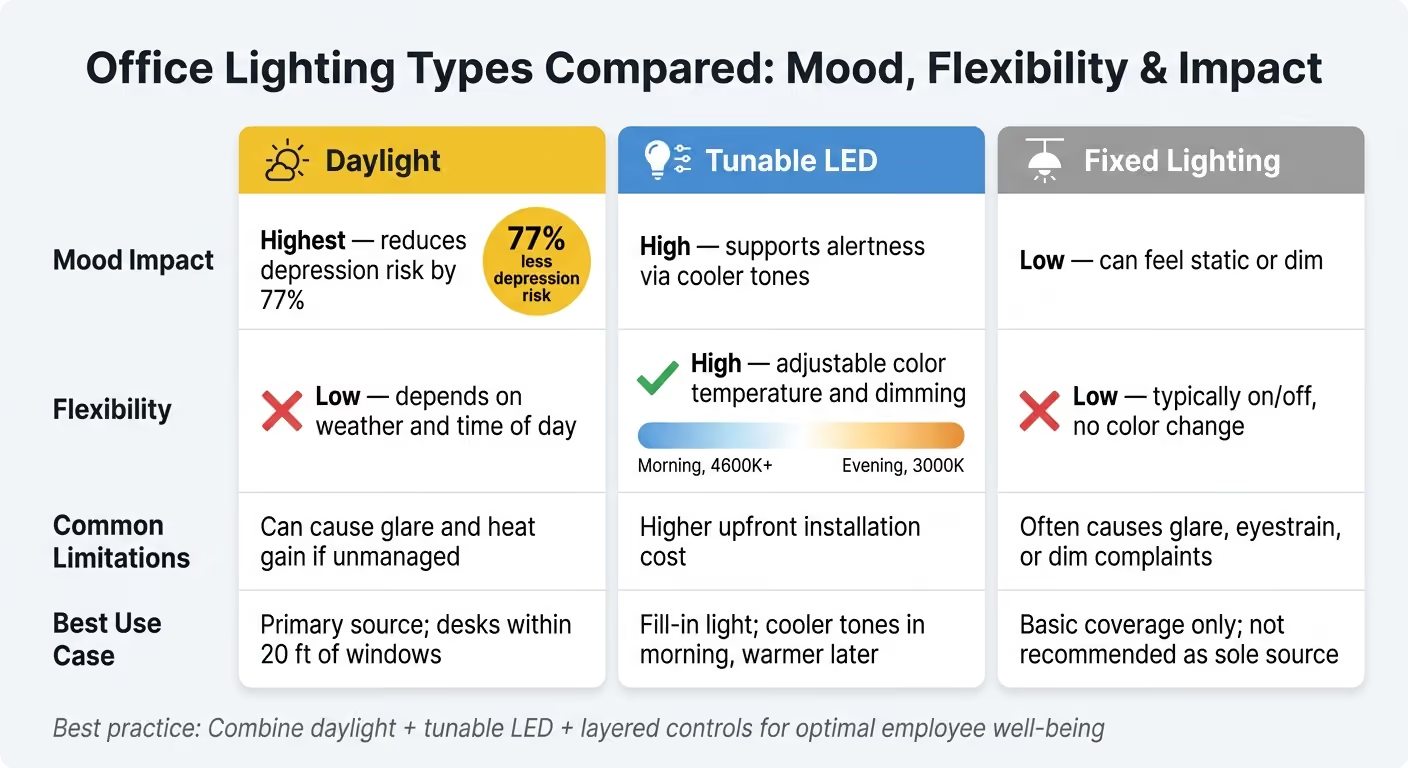
The best office lighting uses daylight plus layered artificial light. It’s not about picking one or the other. It’s about using daylight when it’s available, then using artificial light to fill in what daylight can’t cover, so people can stay comfortable, focused, and in a better mood.
Why Daylight Has the Strongest Mood Support
Daylight does the most for mood. Employees with good daylight access are 77% less likely to report feeling depressed than those in poorly lit offices. [5] It also helps regulate the body clock, which affects sleep and daytime alertness through non-visual pathways. [5]
The catch is simple: not everyone gets enough of it. Fixed shades often stay shut, which blocks daylight and leaves work areas feeling dull. A better setup puts desks within 20 feet of windows. Using glass partitions instead of solid interior walls can also help daylight move deeper into the office while still protecting acoustic privacy. Electrochromic glass can help cut glare and eyestrain without shutting daylight out.
When daylight isn’t enough, artificial light needs to step in without making the office feel flat or harsh.
Daylight vs. Tunable LED vs. Fixed Office Lighting
On cloudy days, in windowless areas, or after hours, artificial lighting takes over. And not all of it works the same way.
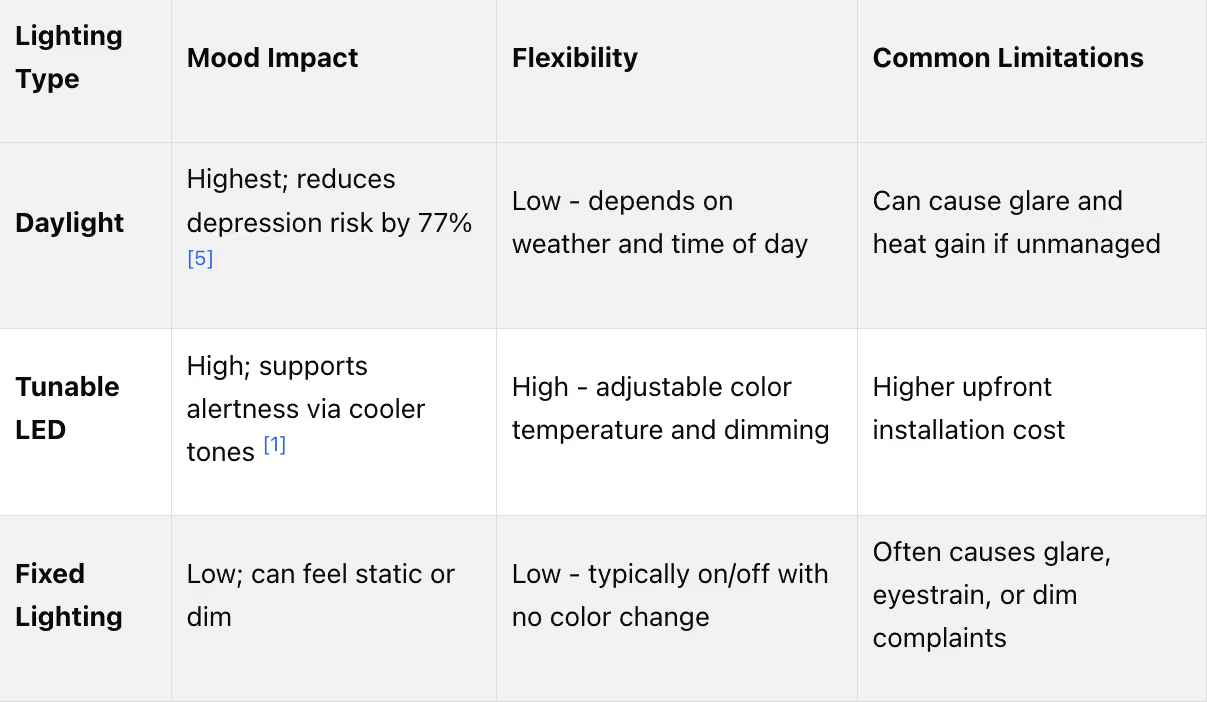
Tunable LEDs stand out because they can shift color temperature during the day. Cooler tones - 4,600K and above - work well in the morning when people need to feel alert. Warmer tones - around 3,000K or less - fit better later in the day or in meeting rooms, where a calmer feel makes more sense. [6]
Fixed fluorescent or LED panels can’t make those shifts. That’s a big reason they tend to feel rigid when the office needs a change from hour to hour.
Ambient, Task, and Accent Lighting in a Layered Plan
A good office lighting plan doesn’t lean on a single fixture type. It combines three layers, and each one does a different job.
- Ambient lighting gives the room its general light, often through dimmable overhead fixtures. Dimming matters because it lets the space ease back when daylight is strong, instead of blasting the room with more light than people need.
- Task lighting supports focused work at individual desks. Instead of turning up the overhead lights for everyone, task lights put light exactly where it’s needed. That can help cut eye strain during screen work or when reviewing documents. [2][5]
- Accent lighting helps manage contrast. If you’ve ever sat near a bright window with a dark wall beside it, you know the effect can feel rough on the eyes. Accent lighting softens that jump and helps the space feel more even.
Lighting Problems That Harm Well-Being
Bad office lighting usually shows up in familiar ways: headaches, sore eyes, and that washed-out, draining feeling that makes a room harder to work in. Daylight and LEDs can help, but they don't solve everything on their own. If glare, patchy brightness, or flicker take over, even a smart lighting setup can still feel wrong.
Glare, Harsh Overhead Light, and Screen Reflections
Older overhead fluorescents can make an office feel flat and harsh. It gets worse at desks packed with monitors. When fixtures sit directly above or in front of screens, reflections pop up and people end up squinting, shifting in their chairs, or moving their screens just to see clearly. That chips away at focus and adds physical strain over the course of the day.
A simple glare audit can help spot the worst trouble areas. Sit at different desks at different times of day and look for reflections on screens [8]. Once you know which fixtures are causing the problem, a few fixes usually help:
- Reposition the fixtures
- Add diffusers
- Use matte screen protectors on monitors
Uneven Brightness and Poor Contrast Across the Office
Dim, uneven light can be just as hard on people. When lighting drops below 300 lux, eye strain and headaches go up [7]. Dark corners can make a space feel dull and unwelcoming. At the same time, sharp jumps between bright and dim areas force the eyes to keep readjusting.
That constant effort adds up. As the day moves on, it gets tougher to stay locked in on detailed or mentally heavy work. Conference rooms and multiuse spaces often run into this problem more than others. Without adjustable controls, there may be no setting that works well for everyone.
Common Lighting Problems and Design Fixes
Use these fixes to turn good lighting ideas into a setup that works in day-to-day office life.
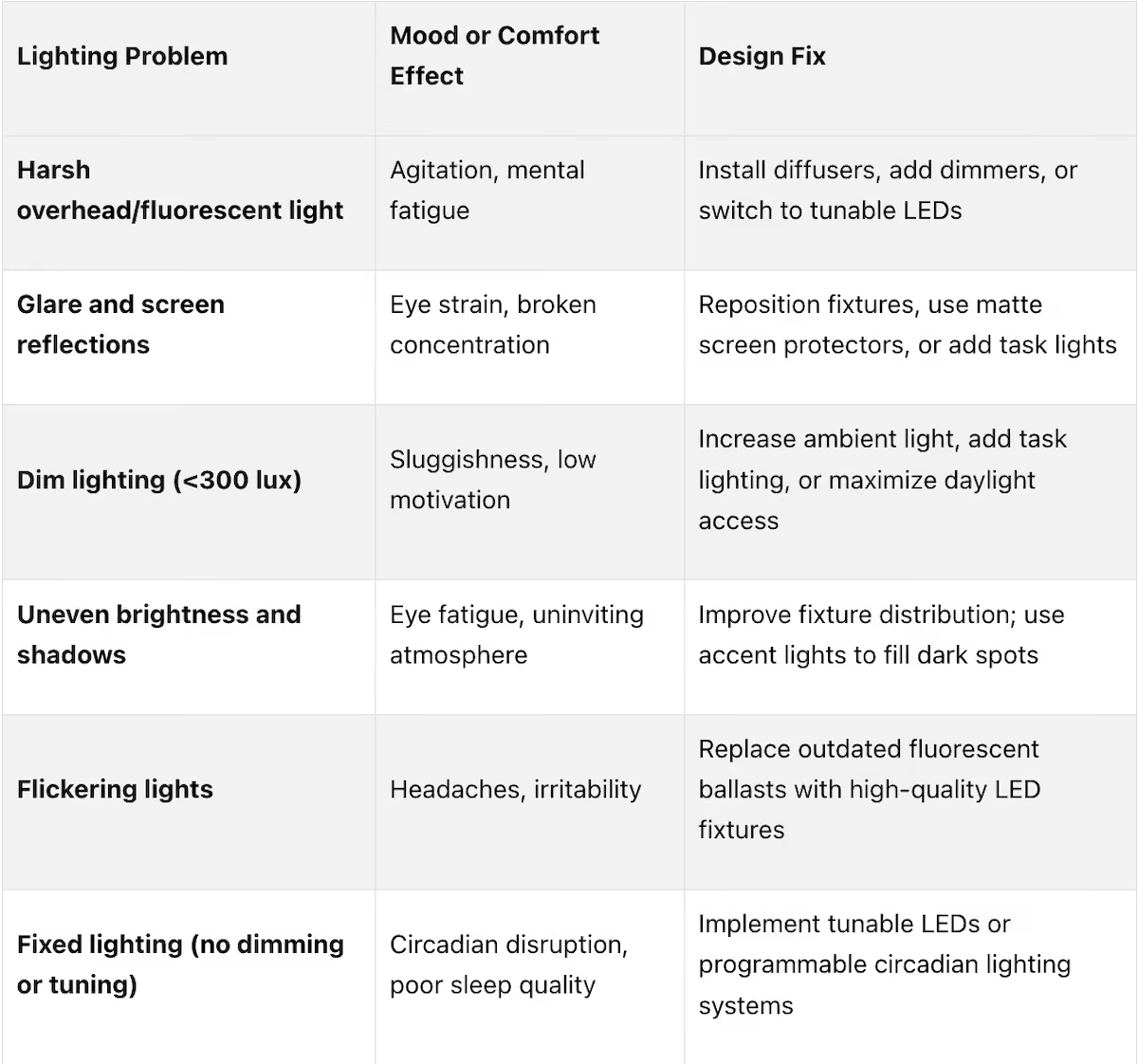
A lot of these fixes don't cost much. Task lamps, dimmers, and ballast replacements can go a long way. The next step is matching each fix to the way each work zone is used.
How to Design a Balanced Office Lighting Plan
Once your lighting layers are in place, the next move is simple: match them to each work zone.
Lighting by Work Zone
A solid lighting plan fits the light to the space. Not every area in an office is used the same way, and treating every zone alike is one of the most common planning mistakes.
Private offices and open-plan desks usually do best with adjustable task lamps paired with ambient overhead light. It also helps to place desks so natural light comes from the side or front, which can cut down on screen glare. When the sky turns gray or the workday runs late, a good desk lamp can make up the difference.
Conference rooms need dimmable lighting that can move from bright presentation mode to a softer setting for discussion. Warmer light tends to work well for informal conversations and brainstorming sessions.
Reception areas should combine ambient and accent lighting to create a clear, welcoming entrance.
Breakout and collaboration zones need lighting that can shift with the moment, from warmer light for casual conversation to brighter light for meetings.
Each zone should give people a cue about the kind of work that happens there. That matters even more in spaces that need to change by task or time of day.
Controls, Adjustments, and Long-Term Planning
Controls matter just as much as the fixture itself. Once each zone has a clear lighting job, the controls help keep the setup useful from morning through evening.
A few practical starting points include:
- Dimmers and tunable LEDs to shift color temperature during the day
- Occupancy sensors and daylight-responsive controls to cut waste automatically
- App-based controls to adjust settings when needs change
- Local user control - like a simple dimmer switch or remote - so people can make small changes that improve comfort and output
If a business isn't ready for a full overhaul, a phased approach can work well. Start by replacing old fluorescent fixtures with LEDs. Then add dimmers and task lamps where they make the biggest difference. Retrofit smart controls can also bring remote-control features to existing hardware without a full infrastructure renovation.
The main goal is flexibility. Add dimmers, task lamps, and adjustable controls early so each area can keep up with changing work.
Key Takeaways
Office lighting shapes more than just what people can see. It affects vision, mood, alertness, and overall well-being.
Daylight is the most effective source for regulating circadian rhythms. It also acts as the strongest natural signal for the body clock. When natural light is limited, tunable LEDs can help mirror the day by using cooler light in the morning and warmer light later on. Blue-enriched light has also been shown to improve self-reported alertness, work performance, and sleep quality.
Poor lighting can wear people down in quiet ways. Glare, uneven brightness, and light levels that are too low can chip away at comfort and focus over time. A layered setup helps fix that by combining ambient, task, and accent lighting.
The day-to-day aim is simple: cut strain, give people more control, and fit lighting to the task at hand. That can mean matching lighting to each work zone, adding dimmers, and letting employees adjust the light in their own space. The best plans bring together daylight, flexible controls, and local task lighting.
If you're planning an office renovation, relocation, or workplace refresh, Office Gallery can help create a design strategy that supports both employee well-being and business performance. Our team works with organizations to design thoughtful, flexible workspaces that balance aesthetics, comfort, and functionality. Contact Office Gallery to explore how the right lighting and furniture solutions can transform your workplace.
FAQs
How much daylight does an office need?
An office needs enough daylight to support visual comfort, mood, alertness, and overall well-being.
Research also shows that access to daylight and outdoor views can improve employee satisfaction and productivity in a big way.
What light level is best for desk work?
For desk work, 200–500 lux is usually the sweet spot. People tend to prefer this range, and it can help support better mood and overall satisfaction.
What’s the easiest lighting upgrade to start with?
Start by improving natural light exposure. That’s often the simplest place to begin.
If that’s not an option, switch to cooler, blue-enriched bulbs. They can help boost mood, alertness, and productivity.
You can also use programmable lighting that shifts color temperature during the day. That setup can support employee well-being and job performance.
•••
Ready to transform your workspace? Contact us today to explore how our expert team can design a tailor-made solution that aligns with your brand and enhances productivity. From design inspiration to project management, we'll guide you through every step of the process to create an office space that fosters creativity, collaboration, and success. Let's embark on a journey to redefine your workspace together.
Key Points
How does light physically affect the brain and body during the workday and why does this matter for office design?
- Circadian rhythm as the biological mechanism connecting light to daytime performance -- the body's internal 24-hour clock is regulated primarily by light received through specialized photoreceptive cells in the eye that are distinct from the cells used for standard vision; these cells detect light intensity and color temperature and send signals to the brain's master clock, which regulates melatonin production, cortisol levels, body temperature, and alertness across the day
- Bright morning light above 1,000 lux measurably improving alertness and performance -- research shows that bright daytime light above 1,000 lux improves both self-reported alertness and objectively measured performance; this light level is achievable near windows on bright days but is rarely achieved through standard office artificial lighting, which often operates in the 200 to 500 lux range
- Dim light below 100 lux creating circadian misalignment and sleep disruption -- many employees spend significant periods of the workday in environments below 100 lux, far below the levels that support healthy circadian entrainment; sustained exposure to inadequate daytime light increases the risk of circadian misalignment, with downstream effects on sleep quality, daytime alertness, and workplace tension that compound over time
- Blue-enriched light improving alertness, work performance, and sleep quality -- research has identified blue-enriched light as a particularly effective circadian signal; blue-enriched light in the morning reduces melatonin more effectively than warmer light, improving alertness and work performance during the day and supporting better sleep at night by maintaining the contrast between daytime and nighttime light exposure
- Non-visual light pathways operating independently of standard vision -- the circadian effects of light operate through non-visual pathways that function regardless of whether an employee is consciously aware of the light environment; this means that poor circadian light exposure affects alertness and mood even in employees who do not consciously identify the lighting as inadequate
- 77% lower depression risk for employees with good daylight access -- this research finding establishes daylight access as one of the most impactful environmental factors in workplace wellbeing, comparable in its effect size to other major wellbeing interventions; for office design decisions, daylight access is not an aesthetic preference but a measurable health and performance variable
What specific visual comfort problems does poor office lighting create and how do they accumulate across the workday?
- Glare from overhead fixtures creating screen reflections that force compensatory behavior -- when overhead fixtures sit directly above or in front of computer screens, their reflections appear as bright patches on the screen surface that partially obscure content and force employees to squint, shift their screen angle, or reposition their chair repeatedly throughout the day; each adjustment is a minor disruption that reduces focus and adds physical strain
- Uneven brightness forcing continuous eye adaptation across the workspace -- sharp transitions between bright and dim areas within the office require the eyes to continuously adapt as they shift focus between zones; this adaptation is involuntary and tiring, particularly during tasks that require the eyes to move frequently between different brightness levels such as reading printed documents and viewing a screen simultaneously
- Light levels below 300 lux increasing eye strain and headache frequency -- research establishes 300 lux as an approximate threshold below which eye strain and headaches begin to increase; many office environments, particularly those relying on aging fluorescent fixtures or inadequate ambient systems, operate below this threshold in portions of the workspace
- Glare and flicker from older fluorescent fixtures creating sustained discomfort -- older fluorescent fixtures produce subtle flicker at frequencies that many employees cannot consciously perceive but that the visual system registers as an ongoing stressor; combined with the harsh, flat quality of unfocused fluorescent light, this flicker contributes to the headaches and sore eyes that employees in older office environments report at higher rates than those in LED-equipped spaces
- Poor contrast management creating the harsh visual environment that makes work feel draining -- an office environment with high contrast between bright windows and dark adjacent walls, or between brightly lit work areas and dim surrounding zones, creates the visual harshness that makes a workspace feel physically demanding even before the cognitive demands of the work itself are factored in
- Accumulated visual fatigue reducing cognitive performance in the afternoon -- the visual fatigue that accumulates from sustained exposure to glare, uneven brightness, and inadequate task lighting does not remain contained to physical discomfort; research establishes that visual fatigue reduces the cognitive resources available for complex work, contributing to the mid-afternoon performance decline that many employees experience as a general energy slump rather than recognizing it as a lighting-driven phenomenon
Why is a layered lighting approach superior to single-source overhead lighting and how should each layer be specified?
- Single-source overhead lighting failing to serve the different visual demands of different tasks simultaneously -- a single overhead ambient system set to serve document review provides too much light for video conferencing, not enough for detailed close work, and the wrong quality for the relaxed atmosphere of a collaborative discussion; a layered system provides each functional layer independently, allowing the overall light environment to be composed appropriately for any combination of activities
- Ambient layer providing the general room foundation with dimming as a non-optional specification -- dimmable overhead ambient fixtures are the foundation of the layered system; dimming is not a luxury feature but a functional requirement, because without dimming the ambient layer cannot ease back when daylight is strong or when a lower-intensity environment is appropriate for the activity taking place
- Task layer delivering targeted light where visual demands are highest without affecting the whole room -- task lighting at individual workstations provides the focused, high-quality light that screen work and document review require without requiring the entire ambient system to operate at maximum output; a desk lamp at 500 lux at the work surface combined with ambient lighting at 200 to 300 lux in the surrounding space serves both the individual's visual needs and the broader room environment more effectively than overhead-only lighting at a compromise level
- Accent layer managing contrast as a comfort requirement rather than a decorative consideration -- accent lighting is frequently categorized as decorative, but its primary function in an office context is contrast management; an accent light directed at the wall beside a bright window reduces the brightness ratio between the window and the surrounding surface from uncomfortable to acceptable, eliminating the eye strain that high contrast creates at that position
- Color temperature coordination across all three layers -- for a layered lighting system to function cohesively, the color temperatures of the ambient, task, and accent layers should be coordinated rather than mixed arbitrarily; a warm task lamp combined with cool overhead ambient light creates the color inconsistency that makes a workspace feel visually unsettled
- Dimming controls as the mechanism that makes the layered system functional across changing conditions -- a layered lighting system without adequate dimming controls is a fixed system with more components; dimming at the ambient layer, individual control at the task layer, and adjustable accent lighting together create the responsive system that adapts to daylight levels, time of day, and activity type throughout the workday
How should lighting be specified differently for each major office work zone?
- Private offices requiring side or front daylight orientation to eliminate screen glare at the primary workstation -- desk positioning relative to windows is the most impactful private office lighting decision; a desk positioned with the window directly behind it creates the silhouette and screen reflection problem that no amount of artificial lighting can fully resolve; positioning the desk perpendicular to the window or facing the window from a distance provides daylight benefit without direct glare
- Open-plan workstations benefiting from personal task lighting to reduce reliance on overhead ambient systems -- open-plan environments where the ambient system must serve a large number of different workstations simultaneously cannot optimize for any individual position; personal task lamps at individual workstations address each person's specific task lighting needs without requiring the ambient system to compensate
- Conference rooms requiring the full range from bright presentation mode to soft discussion mode -- the functional range of a conference room spans bright, high-contrast presentation lighting and soft, lower-contrast discussion lighting in the same session; dimmable ambient fixtures with tunable color temperature provide this range; a conference room with only a fixed overhead system forces a compromise that serves neither mode well
- Reception areas requiring the welcoming composition that layered ambient and accent lighting provides -- reception lighting that relies on overhead ambient alone creates the institutional flatness that does not serve the welcoming function of the reception area; accent lighting that highlights the reception desk, softens dark corners, and creates visual warmth in the waiting zone makes the reception area feel intentionally designed rather than merely illuminated
- Breakout and collaboration zones requiring the flexibility to shift between social and focused modes -- collaboration zones serve both casual conversation and structured work sessions; lighting that supports one mode but not the other creates friction when the zone's use shifts; dimmable, tunable fixtures with local user control allow the zone to shift between modes without requiring facilities management involvement
- Warehouse and storage areas within office buildings occasionally overlooked in lighting planning -- even non-primary work areas benefit from adequate lighting that reduces the visual strain of working in dim, uneven environments; motion-activated LED fixtures in storage areas, corridors, and utility spaces improve safety, reduce energy waste, and contribute to the overall visual consistency of the office environment
What practical lighting upgrades deliver the greatest improvement for Boston-area offices and what should the upgrade sequence look like?
- LED replacement of older fluorescent fixtures as the highest-return first step -- replacing aging fluorescent fixtures with modern LED equivalents improves color rendering, eliminates flicker, reduces energy consumption, and provides a better quality of light for the same or lower operating cost; this step alone improves the visual environment meaningfully without requiring a full lighting redesign
- Task lamp addition at primary workstations as a low-cost, high-impact second step -- adding adjustable task lamps at the workstations where employees spend the most time provides targeted task lighting that reduces the reliance on overhead ambient systems and improves the visual quality at the positions where it matters most; this step costs relatively little per workstation and produces immediate improvement in comfort and focus
- Dimmer installation on primary ambient fixtures as the control upgrade that enables adaptive lighting -- adding dimmers to existing ambient fixtures, even before any fixture replacement, gives the existing system the flexibility to adapt to daylight levels and activity types; this single upgrade moves the lighting system from fixed to adaptive without requiring new fixtures
- Glare audit and targeted fixture repositioning or diffuser addition -- a systematic glare audit conducted by sitting at each primary workstation at different times of day identifies the specific fixtures causing screen reflections and the specific windows creating glare at specific positions; targeted repositioning, diffuser addition, or matte screen protector installation at identified problem positions provides more precise improvement than broad ambient system changes
- Tunable LED specification for conference rooms and collaborative zones -- conference rooms and collaboration zones are the environments where the full-day range of color temperature provides the most functional benefit; specifying tunable LED fixtures in these higher-visibility, higher-function spaces delivers the greatest return on the premium cost of tunable technology
- Occupancy sensors and daylight-responsive controls as the efficiency and adaptability layer -- occupancy sensors that dim or switch off lighting in unoccupied spaces and daylight-responsive controls that automatically ease the ambient system back when sufficient daylight is available reduce energy waste and remove the need for manual adjustment; these controls ensure the lighting system responds to actual conditions rather than running at fixed output regardless of circumstances
What role does Office Gallery International play in supporting better-lit Boston-area office environments?
- Furniture specification directly affecting lighting performance at the workstation level -- the furniture choices that Office Gallery specifies affect lighting outcomes at the workstation level in ways that the lighting system alone cannot control; desk depth determining monitor distance and screen angle, desk finish affecting surface reflectance and glare, partition height determining daylight penetration into the work area, and glass versus solid partition selection all directly influence the visual environment at each workstation
- Desk positioning as a lighting decision integrated into space planning -- Office Gallery's space planning process accounts for window location, natural light direction, and desk orientation to minimize screen glare and maximize daylight benefit at each workstation position; a desk positioned by a space planner who understands the relationship between furniture orientation and lighting performs better visually than one positioned without that consideration
- Glass partition specification enabling daylight to penetrate deeper into the office floor plate -- demountable wall systems with glass panels, including the NxtWall systems Office Gallery specifies, allow daylight to move through enclosed office areas rather than being blocked at the first interior wall; this glass partition specification decision has a larger impact on daylight availability across the office than most artificial lighting upgrades
- Finish selection coordinating with the lighting environment -- desk surface finish, chair upholstery, and partition material selections affect how light behaves in the workspace; matte finishes reduce glare from both artificial and natural light sources, while high-gloss finishes create the reflection problems that contribute to eye strain; Office Gallery's specification process accounts for finish reflectance alongside aesthetic preference
- Collaborative and reception area furniture creating the spatial composition that layered lighting completes -- the accent lighting layer that completes a well-designed reception or collaborative area is most effective when the furniture arrangement it illuminates has been thoughtfully composed; the spatial composition that Office Gallery's design team creates for reception and collaborative zones provides the foundation that the lighting layer completes
- On-site consultation enabling lighting and furniture planning to be addressed together -- Office Gallery International's on-site consultation process evaluates the existing space including window locations, current lighting quality, and glare problem areas alongside furniture requirements; this integrated evaluation produces a furniture specification that works with the lighting environment rather than creating new lighting problems through poorly positioned desks, high-gloss finishes, or partition configurations that block daylight; contact the Office Gallery team at 781-762-3733 or visit the showroom at 151 Carnegie Row in Norwood to begin the conversation