Best Lighting Types for Collaborative Workspaces
Proper lighting boosts productivity by 10–25% and cuts eye strain by 84% – yet most offices underutilize it. This guide covers the five best lighting types for collaborative workspaces: LED panels, pendant lights, task lighting, accent lighting, and natural light, with specs, placement tips, and energy savings data.
Post Summary
The five best lighting types for collaborative workspaces are LED panels for uniform ambient light, pendant lights for focused task and style, task lighting for precision work surfaces, accent lighting for defining zones and brand identity, and natural light for mood, wellbeing, and energy savings – layered together for maximum effectiveness.
LED panels consume up to 60% less energy than traditional fluorescent fixtures and reduce cooling costs by as much as 40% since they run cool – with a lifespan exceeding 50,000 hours, most workplaces see a full return on investment within 18 to 24 months.
Warmer color temperatures between 3,500K and 4,100K promote a comfortable, collaborative atmosphere, while cooler temperatures of 5,000K or higher boost alertness and concentration for deep focus work – tunable LED systems allow organizations to shift between these settings throughout the day.
Workers exposed to natural light report an 84% reduction in eye strain, headaches, and blurred vision – sunlight also boosts serotonin for improved mood and energy while regulating melatonin for better sleep-wake cycles, directly improving alertness, morale, and team satisfaction.
Meeting rooms and detailed work areas should target 500 to 750 lux, open-plan collaborative zones work well at 300 to 500 lux, and precision tasks like graphic design may require 800 to 1,000 lumens from task lighting – with natural light and smart dimming systems adjusting levels throughout the day.
Collaborative workspaces thrive on lighting that supports both teamwork and individual focus. The right lighting setup can reduce eye strain, boost alertness, and improve productivity by 10–25%. Here are five key lighting types to consider:
- LED Panels: Provide uniform, flicker-free light, reduce headaches, and save up to 60% on energy costs.
- Pendant Lights: Offer focused illumination for specific tasks and add style to the workspace.
- Task Lighting: Delivers direct, concentrated light for precision work, reducing fatigue.
- Accent Lighting: Highlights architectural features and creates inviting zones.
- Natural Light: Improves mood, reduces eye strain by 84%, and enhances overall well-being.
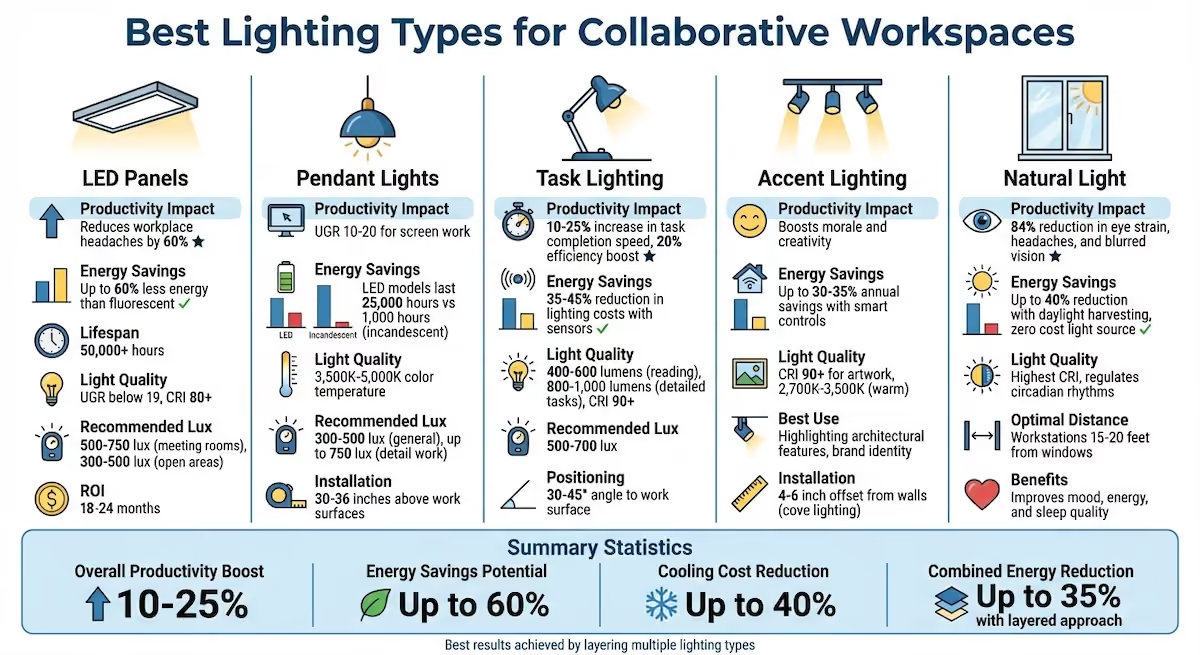
Designing Perfect Lighting for a Collaborative Workspace.
1. LED Panels
LED panels are a game-changer for collaborative workspaces, offering even, flicker-free lighting that supports both group brainstorming and individual focus. By using edge-lit or back-lit technology, these panels spread light uniformly across their surface, eliminating dark spots and the "zebra effect" often seen with fluorescent lighting [8][11]. Beyond just brightening a room, proper LED lighting has been shown to reduce workplace headaches by over 60% [7].
Illumination Quality
LED panels excel in providing consistent, comfortable lighting. With low-glare diffusers and a Unified Glare Rating (UGR) below 19, they help minimize screen reflections, making them perfect for spaces with heavy screen use [9][11]. Their high Color Rendering Index (CRI) of 80 or above ensures that colors appear accurate and vibrant, which is vital for creative tasks. For meeting rooms or areas requiring detailed work, aim for lighting levels between 500–750 lux, while open-plan areas are well-suited to 300–500 lux [7].
In addition to their visual benefits, these panels also deliver impressive energy savings.
Energy Efficiency
LED panels consume up to 60% less energy compared to traditional fluorescent fixtures, and they remain cool to the touch. This not only lowers energy bills but also reduces cooling costs by as much as 40% [8][10][13]. With a lifespan exceeding 50,000 hours, they drastically cut down on maintenance and replacement expenses. Many workplaces see a full return on investment within just 18 to 24 months, thanks to these energy savings [2].
But the benefits don’t stop there - LED panels also offer unmatched versatility.
Flexibility and Adjustability
Available in standard sizes like 2×2 ft and 2×4 ft, as well as customizable shapes, LED panels can fit a wide range of design needs [7]. Features like tunable white allow users to adjust color temperatures from 2,700K to 6,500K, making it easy to switch from cool tones for focused work to warm tones for relaxed collaboration [5]. Dimmable options with 0–10V controls let you fine-tune brightness for specific tasks, whether it’s a presentation or a brainstorming session [9][11]. Smart technology takes it a step further, offering app-based scheduling and even voice control for effortless operation [7].
Aesthetic Appeal
With their slim, low-profile design, LED panels blend seamlessly into any workspace [7][12]. Whether recessed, surface-mounted, or suspended, they adapt to various ceiling types and architectural styles. This sleek, minimalist look not only enhances functionality but also adds to the overall ambiance of collaborative spaces.
2. Pendant Lights
Pendant lights bring a practical and stylish lighting option to collaborative workspaces, doubling as task, ambient, or accent lighting depending on how they’re used and where they’re placed [14]. Working alongside LED panels, these lights provide focused illumination tailored to specific tasks. Unlike standard overhead fixtures that spread light evenly, pendants concentrate light exactly where it’s needed. This targeted approach not only enhances visibility for detailed work but also helps reduce eye strain [15]. Many pendant designs include direct/indirect lighting modules, which cast light downward for task work while reflecting it upward to brighten the space. This dual effect avoids the closed-in feel that recessed lighting can sometimes create [14].
Illumination Quality
Pendant lights are designed with visual comfort in mind, achieving a Unified Glare Rating (UGR) between 10 and 20. This makes them ideal for employees working on screens or performing precision tasks [14]. LED pendants can also be adjusted for color temperature, ranging from 3,500K to 5,000K, to simulate natural daylight. This feature supports circadian rhythms and helps maintain alertness throughout the workday [21,23]. For general office tasks, aim for 300 to 500 lux at desk level, increasing up to 750 lux for work that requires fine detail [15].
Energy Efficiency
Equipped with LED technology, pendant lights consume significantly less energy and boast a lifespan of up to 25,000 hours - far outlasting the 1,000-hour lifespan of traditional incandescent bulbs [16]. Their localized focus reduces wasted light in unused areas, and pairing them with smart sensors or timers can further optimize energy use based on occupancy and time of day [16]. Studies have even linked high-quality LED lighting to better workplace efficiency and employee performance [15].
Flexibility and Adjustability
For the best results, position pendant lights 30–36 inches above work surfaces and space them 24–30 inches apart to ensure even and focused lighting [22,23]. Many models allow for adjustable height, angle, and color temperature. Cooler settings (4,000K–6,500K) are ideal for boosting alertness, while warmer tones create a more relaxed atmosphere. This adaptability makes them a great fit for varying workspace needs [21,23].
Aesthetic Appeal
Pendant lights aren’t just functional - they add a touch of style to collaborative spaces. From sleek, minimalist designs to bold, artistic fixtures, they blend seamlessly into any office environment. Some modern models, like the Acoustic Trio, even combine sound-absorbing materials with LED lighting, addressing both illumination and noise concerns in shared work areas [14]. Next, let’s dive into task lighting, another essential element for collaborative workspaces.
3. Task Lighting
Task lighting takes the concept of focused illumination to the next level, catering specifically to areas where precision and clarity are crucial. It provides direct, concentrated light - typically between 500 and 700 lux - on workspaces like desks, meeting tables, or collaborative zones [5]. Unlike broad overhead lighting, task lighting targets specific surfaces, reducing shadows and glare. This helps alleviate eye strain and fatigue, making it especially useful in environments where people switch between activities like brainstorming, computer work, and hands-on tasks.
Illumination Quality
For reading or computer work, aim for lighting that provides 400–600 lumens, while more detailed tasks may require 800–1,000 lumens [18]. The color temperature of the light also matters: neutral white (3,500K to 4,100K) works well for most office tasks, while cooler white (5,000K to 6,500K) enhances focus during high-concentration activities [18]. For tasks involving color accuracy, like graphic design, choose fixtures with a Color Rendering Index (CRI) of 90 or higher to ensure colors appear true to life [18].
Well-designed task lighting can lead to noticeable improvements in productivity, including a 10% to 25% increase in task completion speed and up to a 20% overall boost in efficiency [18]. This targeted lighting not only enhances work performance but also supports smarter energy use.
Energy Efficiency
Localized task lighting can reduce the need for high ambient light levels, which helps lower energy consumption across the workspace [1]. By incorporating smart sensors and dimmers, businesses can cut lighting energy costs by 35% to 45%. Daylight harvesting sensors, particularly in areas near windows, can further reduce energy use by up to 40% [5]. LED task lights are a standout choice for energy efficiency - they often last over 25,000 hours and emit minimal heat [18].
Flexibility and Adjustability
Task lighting fixtures with adjustable arms, swivel heads, or gooseneck designs allow users to direct light exactly where it's needed [18]. This adaptability is perfect for dynamic workspaces, enabling transitions from bright, focused lighting for brainstorming sessions to softer, ambient lighting for casual discussions [4]. Advanced systems even offer tunable white light that shifts color temperature throughout the day [5].
To maximize comfort and visibility, position task lights on the side opposite your dominant hand to avoid shadows. Direct the light away from computer screens, using fixtures with diffusers or matte finishes to minimize glare [18][19]. Ideally, position the light at a 30°–45° angle relative to the work surface for optimal results [22].
Aesthetic Appeal
Task lighting doesn’t just serve a functional purpose - it can also enhance the overall design of a space. From decorative pendants to sleek LED table lamps, these fixtures can act as artistic elements that reflect a company’s brand identity [19]. Industrial-style lights with metallic finishes or exposed Edison bulbs add character to collaborative zones [20][21]. On the other hand, minimalist designs with slim profiles integrate effortlessly into modern office decor [20]. Pairing task lighting with ambient and accent lighting layers creates depth and visual interest without overwhelming the space [18][5].
4. Accent Lighting
Accent lighting brings more than just brightness to a space - it enhances functionality and adds character by spotlighting architectural details and reinforcing brand identity. Unlike ambient or task lighting, accent fixtures serve a dual role: they highlight key design elements like artwork, branding, or unique architectural features while adding dimension and depth to the room [5]. This thoughtful use of lighting can also help define distinct zones within an office, signaling areas meant for creativity or informal collaboration, separate from focused workspaces [5].
Aesthetic Appeal
Accent lighting has a strong visual impact. Fixtures like wall sconces, LED strips, and decorative pendants create a warm, inviting atmosphere that can boost employee engagement [3]. By drawing attention to feature walls, company logos, or motivational murals, these lights strengthen brand identity while breaking away from the monotony of traditional office layouts [5]. For creative spaces, track lighting offers unmatched flexibility, allowing adjustments as displays or furniture arrangements evolve [2].
Modern offices are also embracing RGBW (color-changing) LED panels in areas like reception or event spaces. These panels allow companies to align the office atmosphere with branding or special events [5]. When using accent lighting to highlight artwork or decor, select fixtures with a Color Rendering Index (CRI) of 90 or higher to ensure accurate color representation [5].
Illumination Quality
Accent lighting plays a key role in enhancing visual comfort by balancing bright work zones with softer, darker areas. Techniques like backlighting and wall-washing can make narrow corridors or small booths feel more spacious [3][5]. Layering accent lighting with ambient and task lighting reduces harsh shadows, helping to create a comfortable and visually balanced environment [23]. For relaxed breakout spaces, warm white light (2,700K–3,500K) fosters a cozy feel, while neutral tones work better in task-heavy areas [2].
Energy Efficiency
When used strategically, accent lighting can cut down on the need for intense overhead lighting, especially when paired with smart dimmers and motion sensors. This approach can lead to annual energy savings of up to 30% [2][5]. Independently controlled accent zones can further reduce energy use by as much as 35% [5]. Positioning lights near reflective surfaces or light-colored walls can amplify brightness without requiring additional fixtures [23]. For cove lighting, maintain a 4–6 inch offset from walls to ensure even light distribution [5].
Flexibility and Adjustability
Dimmable accent fixtures allow employees to tailor lighting to the time of day or the specific mood required for different activities [17]. LED track systems, in particular, offer exceptional adaptability, enabling light to be redirected as office needs shift [2]. This flexibility is especially useful in multipurpose spaces, where the same area might host energetic brainstorming sessions one moment and quiet video calls the next [3]. These versatile lighting solutions not only enhance the overall look of the office but also support dynamic and functional design, as seen in Office Gallery International's innovative projects.
5. Natural Light Integration
Expanding on the advantages of dynamic artificial lighting, incorporating natural light can transform a workspace into a healthier and more productive environment. Natural light is not only free but also plays a significant role in improving employee well-being. Workers exposed to sunlight report an 84% reduction in eye strain, headaches, and blurred vision [6]. Sunlight also boosts serotonin levels, which enhances mood and energy, while regulating melatonin to support better sleep-wake cycles [27]. This combination leads to heightened alertness, improved morale, and greater team satisfaction [27][4].
Illumination Quality
Natural light provides exceptional illumination with a high Color Rendering Index (CRI), making colors appear more accurate and reducing visual strain [24]. For optimal results in collaborative spaces, position workstations about 15–20 feet from windows [24]. Glass partitions or transparent materials can help extend daylight deeper into interior areas, ensuring everyone benefits from its presence [24]. Additionally, light-colored walls and reflective surfaces can amplify sunlight, enhancing brightness without relying on extra lighting fixtures [24][25].
Energy Efficiency
Natural light integration reduces the need for artificial lighting, offering significant energy savings. Daylight harvesting systems can lower energy use by up to 40%, cutting down on lighting costs [5]. To ensure maximum light transmission, regular window cleaning is essential [24]. Pairing natural light with high-CRI LED systems guarantees consistent lighting during cloudy days or winter months, maintaining efficiency without sacrificing brightness [24].
Flexibility and Adjustability
Effectively managing natural light requires tools like adjustable blinds or solar shades to control glare and heat [24][25]. Position computer screens to avoid direct sunlight, which can cause discomfort and eye strain [28][6]. Smart lighting sensors can adjust artificial light levels based on the amount of incoming daylight, ensuring a comfortable and adaptable workspace throughout the day [5]. This flexibility complements other lighting solutions like LED and task lights, catering to various needs in multipurpose areas - whether for brainstorming or focused work.
Aesthetic Appeal
Natural light fosters a welcoming and inspiring atmosphere, encouraging creativity and collaboration [25][26]. Placing common areas or meeting hubs near windows ensures more people benefit from daylight exposure [6][25]. Pairing natural light with biophilic elements, such as indoor plants or living walls, further reduces stress and stimulates creativity [5]. This combination creates a workspace that feels warm and inviting, making it easier for teams to connect, share ideas, and work together effectively. By integrating natural light, modern office designs can achieve a balance between functionality and comfort, enhancing the overall work experience.
Comparison Table
Here’s a quick breakdown of how different lighting types stack up for collaborative workspaces:
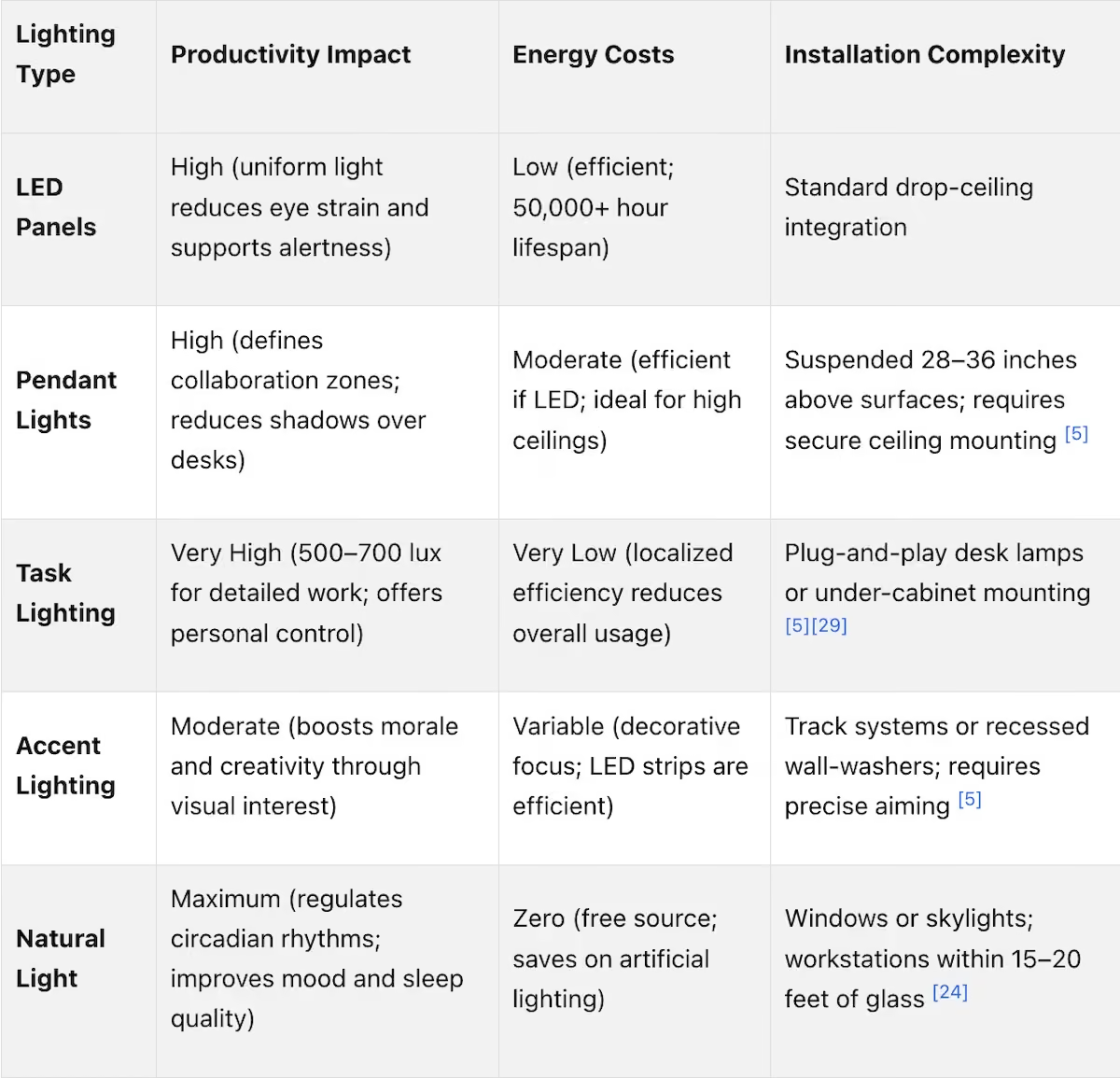
This table highlights how combining these lighting options can create a balanced and effective workspace. LED panels bring uniform brightness and energy savings, task lighting ensures precision for detailed tasks, and natural light provides unmatched benefits for mood and productivity. The key is layering these solutions to enhance both functionality and visual appeal in office environments.
Office Gallery International Design Services
Office Gallery brings over three decades of experience in designing lighting solutions for collaborative workspaces throughout the Greater Boston area. Notably serving Beverly, Waltham, Marlborough, Plymouth, and Quincy, their Norwood, MA-based team reaches out into all of Southern New England and handles every step of the process - from consultation to installation - making office design projects straightforward and stress-free [30].
Their approach is highly personalized. Starting with on-site consultations, the team evaluates each workspace's unique needs, considering factors like employee count and work styles. They use a layered lighting strategy that combines overhead, task, and accent lighting while making the most of natural sunlight. This method not only enhances productivity and collaboration but also supports employee well-being and reduces energy expenses.
"At Office Gallery, we take the guesswork out of office space planning. We can help with design, layout, furniture selection, and more." – Office Gallery International
Their four-stage process ensures every detail is covered. Here’s how it works:
- Curate: Workplace analysis and showroom visits to explore options.
- Iterate: Space planning, budgeting, and selecting finishes.
- Execute: Project management, fabrication, delivery, and installation.
- Support: Ongoing help with warranties, moves, and reconfigurations.
This structured process - Curate, Iterate, Execute, and Support - has helped transform complex office spaces into functional, customized environments.
Office Gallery also focuses on creating zone-based layouts to enhance workspace functionality. Their designs define specific zones for meetings, breakout areas, and quiet spaces, ensuring desks and furniture are arranged to encourage communication while adhering to ergonomic principles. Lighting is seamlessly integrated into these layouts, improving efficiency and complementing the overall design. To explore their modern office furniture and design solutions, schedule an appointment to visit their Norwood showroom.
Conclusion
Effective lighting in collaborative workspaces relies on a thoughtful combination of different lighting types, tailored to specific needs. It’s not about picking just one fixture - it’s about layering multiple types to create spaces that are energizing, comfortable, and adaptable. For example, LED panels provide efficient ambient lighting to keep areas well-lit, while pendant lights add style and depth in spaces like conference rooms or reception areas. Task lighting empowers employees with control over their work surfaces, and accent lighting brings warmth, making the environment feel inviting rather than sterile.
This layering approach is crucial. By blending ambient, task, and accent lighting with natural light, businesses can support focused tasks and dynamic team activities while cutting energy use by up to 35% [5]. Plus, exposure to natural light has been linked to an 84% reduction in eye strain, headaches, and blurred vision among employees [6]. Adjustable color temperatures - ranging from cool tones to boost alertness to warm tones for relaxation - further enhance productivity [5].
Incorporating these lighting strategies creates a balance between individual focus and team collaboration. By carefully planning zones and assigning the right lighting to each, businesses can design workspaces that help employees perform at their best while staying comfortable throughout the day. These principles guide Office Gallery International in crafting tailored lighting solutions that transform work environments.
FAQs
How do I layer ambient, task, and accent lighting in one space?
Layering ambient, task, and accent lighting is all about mixing different light sources to create a well-lit, functional space. Begin with ambient lighting - this provides general illumination and can come from ceiling fixtures or wall-mounted sconces. Next, incorporate task lighting for specific activities, like desk lamps or under-cabinet lights for workspaces. Finally, add accent lighting to draw attention to standout features, such as artwork or unique architectural elements. The key is to ensure these lighting layers complement each other, avoiding glare or harsh shadows.
What LED color temperature is best for teamwork vs. deep focus?
For teamwork, lighting with a warmer color temperature - ranging between 3500K and 4100K - is ideal. It promotes a comfortable and collaborative environment. On the other hand, if deep focus is needed, cooler color temperatures of 5000K or higher work best. These cooler tones help boost alertness and improve concentration.
How can we reduce glare from windows and computer screens?
To cut down on glare, make sure your monitor is positioned so that light sources are to your side instead of directly behind you. Use curtains or shades to control excessive natural light, and avoid setting up your monitor directly under overhead lighting. You can also use anti-glare screen filters to reduce reflections. Adjust task lighting carefully to avoid bouncing light off the screen, helping to ease glare and reduce eye strain.
•••
Ready to transform your workspace? Contact us today to explore how our expert team can design a tailor-made solution that aligns with your brand and enhances productivity. From design inspiration to project management, we'll guide you through every step of the process to create an office space that fosters creativity, collaboration, and success. Let's embark on a journey to redefine your workspace together.
Key Points
What makes LED panels the foundation of effective collaborative workspace lighting?
- Uniform, flicker-free illumination using edge-lit or back-lit technology eliminates the dark spots and "zebra effect" of fluorescent lighting – directly linked to a 60% reduction in workplace headaches in spaces that make the switch
- UGR below 19 and CRI of 80 or above ensure comfortable, glare-reduced light for screen-heavy environments and accurate color rendering for creative tasks – two technical standards worth specifying when evaluating fixtures for collaborative offices
- Tunable white technology from 2,700K to 6,500K allows organizations to match lighting to the activity – cool tones for morning focus sessions, warm tones for afternoon collaborative discussions – without replacing fixtures
- 60% energy savings over fluorescent combined with reduced cooling costs of up to 40% and a 50,000-plus hour lifespan produce ROI within 18 to 24 months – making LED panel upgrades one of the highest-return investments available to Boston-area office managers
- Smart technology integration including app-based scheduling, occupancy sensors, and voice control enables automated adaptation to occupancy patterns, further reducing energy waste in spaces that are only partially used throughout the day
How should pendant lights be used in collaborative workspaces and what specifications matter most?
- Positioning 30 to 36 inches above work surfaces and spacing 24 to 30 inches apart ensures even, focused illumination without overlapping or creating dark zones between fixtures – a placement standard that applies whether the pendants are serving as primary or supplementary light sources
- UGR between 10 and 20 makes pendants well-suited for screen-heavy environments and precision tasks – lower than many overhead fixtures and an important specification to verify when selecting pendants for meeting rooms or collaboration hubs
- Direct/indirect lighting modules cast light downward for task work while reflecting it upward to brighten the ceiling plane – avoiding the closed-in feeling that pure recessed lighting can create in collaborative spaces and making rooms feel larger and more inviting
- Color temperature range of 3,500K to 5,000K in LED pendant models simulates natural daylight to support circadian rhythms and maintain alertness – a meaningful wellbeing consideration for teams spending full days in interior collaborative spaces without window access
- Acoustic pendant designs combining sound-absorbing materials with LED lighting address two of the most common open-plan office complaints simultaneously – noise management and inadequate task lighting – in a single fixture investment
What are the technical specifications and placement guidelines for task lighting in collaborative offices?
- 500 to 700 lux range for collaborative work surfaces provides concentrated illumination without creating harsh contrast against surrounding ambient light – the target zone for meeting tables, brainstorming areas, and shared workstations
- Neutral white at 3,500K to 4,100K suits most office task work, while cooler white at 5,000K to 6,500K supports high-concentration activities – and CRI of 90 or higher is essential for any color-critical work including design, presentations, and material review
- Positioning at a 30 to 45-degree angle relative to the work surface, on the side opposite the dominant hand, minimizes shadows and prevents screen reflections – the most commonly overlooked placement detail that determines whether task lighting helps or hinders productivity
- Smart sensors and dimmers reducing energy costs by 35 to 45% make task lighting not just a productivity tool but an energy management strategy – with daylight harvesting sensors near windows adding a further 40% reduction in energy use during daylit hours
- 10 to 25% increase in task completion speed and up to 20% overall efficiency improvement are documented outcomes of well-designed task lighting – concrete metrics that support the business case for upgrading from generic ambient-only lighting to a layered approach
How does accent lighting define collaborative zones and contribute to brand identity?
- Zone definition without physical barriers is accent lighting's most practical function in open-plan offices – directing attention to specific areas signals their purpose to employees, separating creative collaboration zones from focused work areas without requiring walls or partitions
- RGBW color-changing LED panels in reception areas and event spaces allow companies to align office atmosphere with brand colors or special occasions – a flexibility that static lighting cannot provide and that reinforces brand identity at the point of first impression
- CRI of 90 or higher for accent fixtures highlighting artwork, logos, or feature walls ensures accurate color representation – a technical requirement that matters significantly when brand colors or premium materials are being showcased
- Wall sconces, LED strip lighting, and decorative pendants create warmth and visual depth that overhead lighting alone cannot achieve – reducing the institutional feeling of large collaborative spaces and improving the employee experience enough to directly influence hybrid work attendance decisions
- Independent zone control reducing energy use by up to 35% means accent lighting pays back its cost not just in aesthetic value but in measurable operational savings – particularly significant in large collaborative spaces where full-intensity overhead lighting is rarely necessary throughout the entire footprint
What design principles govern effective natural light integration in collaborative workspaces?
- Positioning workstations 15 to 20 feet from windows balances natural light exposure with glare management – beyond that distance, daylight contribution diminishes significantly, while closer positioning requires careful screen orientation and solar shading to prevent discomfort
- Glass partitions and transparent materials extending daylight into interior areas ensure that the wellbeing benefits of natural light are not limited to employees seated near the perimeter – a meaningful equity consideration in large open-plan collaborative environments
- Daylight harvesting systems reducing energy use by up to 40% make natural light integration a financial investment as well as a wellbeing one – automatically dimming artificial lighting in response to available daylight without requiring manual adjustment
- Adjustable blinds or solar shades are essential management tools rather than optional accessories – controlling glare and heat gain while preserving the mood and energy benefits of natural light, particularly critical in east and west-facing offices with direct morning or afternoon sun
- Pairing natural light with biophilic elements including indoor plants and living walls amplifies the stress-reduction and creativity benefits of each – a combination that Salesforce, Sandvik, and other organizations have documented as directly improving employee satisfaction and workspace pride
How does Office Gallery International approach lighting design for collaborative workspaces in Greater Boston?
- On-site consultation evaluating employee count, work styles, and spatial conditions ensures lighting recommendations are grounded in the actual use patterns of each space rather than generic specifications that may not serve the team's specific collaborative activities
- Layered lighting strategy combining overhead, task, and accent lighting with natural light optimization reflects the same principles this article outlines – applied by a team with over three decades of local experience translating those principles into functioning office environments
- Zone-based layout design defining specific areas for meetings, breakout discussions, and quiet focus supports lighting decisions that reinforce spatial purpose – making the physical environment actively guide how employees use the space rather than leaving that entirely to signage or convention
- Four-stage process of Curate, Iterate, Execute, and Support covers the full project lifecycle from workplace analysis through ongoing reconfiguration support – ensuring lighting investments are maintained and adapted as team needs evolve rather than becoming static fixtures that degrade in effectiveness over time
- Serving Boston, Beverly, Waltham, Marlborough, Plymouth, and Quincy with showroom visits, 3D visualization, and professional installation coordination means Greater Boston businesses have a local partner with the vendor relationships and regional knowledge to source the right fixtures at the right price point for each project