
Fitting an Office Space to Your Personality
Your office design should fit your personality, not the other way around. Research from the Journal of Research and Personality shows extroverts thrive in open benching environments while introverts need private spaces. Create hybrid 'neighborhoods' that support both personality types for maximum productivity and happiness.
Post Summary
Extroverts prefer open benching without partitions for visual interaction, while introverts need private cubicles or offices to minimize distractions and support deep focus.
A study in the Journal of Research and Personality found that matching office layout to personality type significantly improves employee happiness, focus, and productivity.
Neighborhoods are designated quiet zones within open-plan offices that provide introverts with respite areas while maintaining the collaborative benefits of open layouts.
Employee-centered design involves workers in the planning process, ensuring their unique needs are met and leading to higher satisfaction and retention rates.
Yes, hybrid layouts combining open benching areas with private zones and quiet neighborhoods can effectively support both extroverts and introverts in the same workspace.
In light of the great resignation, the trend which has seen employees voluntarily leave their jobs in the wake of the pandemic, company leaders are focusing on ways to retain their employees, such as providing flexible hours, a hybrid work environment and workspace design that appeals to different personality types.
A recent study has provided the science behind creating office space based on personality type. In the study, published in the Journal of Research and Personality, researchers discovered that workspaces should be designed to fit the worker, not the other way around. Distinct differences exist in the way extroverts like to work versus introverts.
Keep reading to discover how to design your company’s workspaces with your employees in mind.
Workspaces Designed for Extroverts
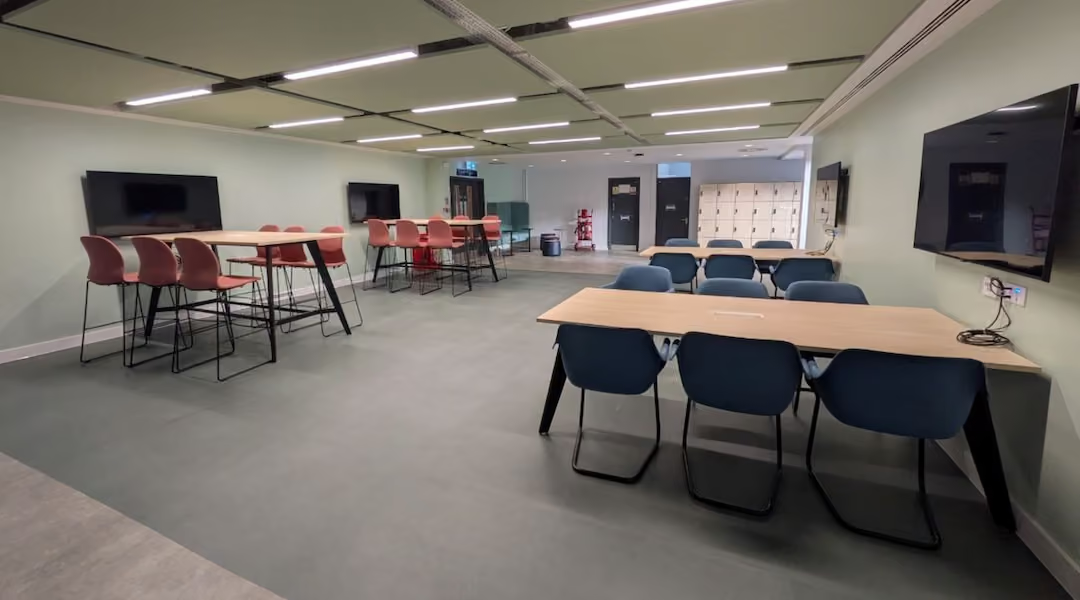
The study in the Journal of Research and Personality revealed that people who are more extroverted are often happier and more focused in offices with open seating arrangements. This arrangement is known as benching, and benching office furniture is arranged without partitions so that employees can see each other.
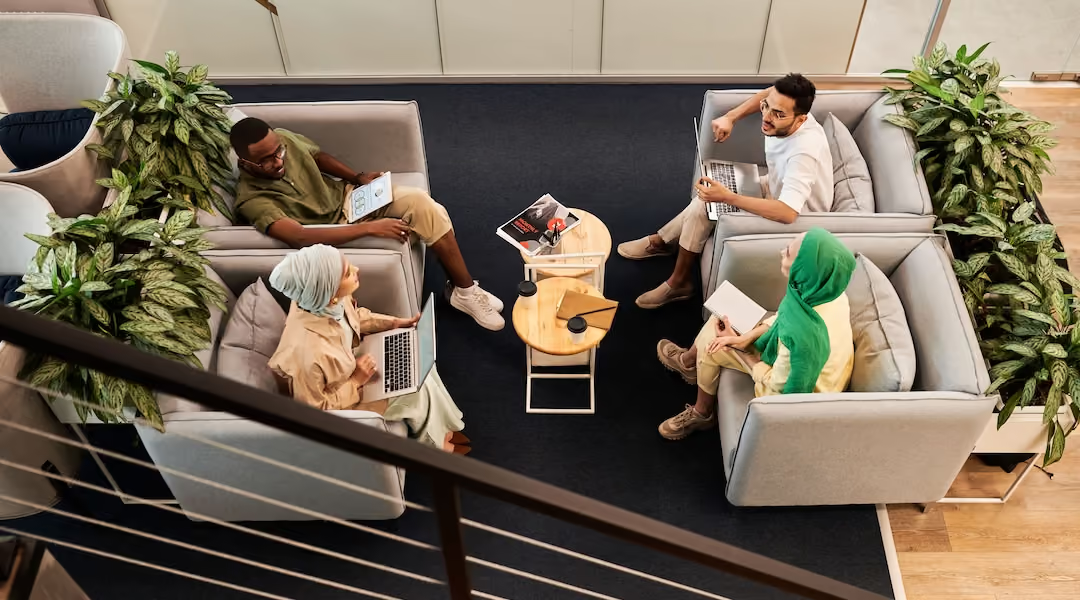
Extroverts gain energy from interacting with others, so an open floor plan appeals to them. Providing spaces for them to informally engage with other workers, such as lounge areas, and brainstorming areas offer them opportunities to be inspired by and engaged with fellow employees.
Workspaces Designed for Introverts
Introverts often find constant social interaction distracting and need quiet areas, like private offices or partitioned cubicles, that allow them to focus on the task at hand. Workspace cubicle furniture provides the privacy these introverts need to be productive.
Introverts typically prefer traditional office spaces, but current design trends lean more toward the open floor plans that extroverts prefer. Creating neighborhoods in an open floor office plan will allow introverts to get away from the hustle and bustle, give them a place to focus and put their minds at ease.
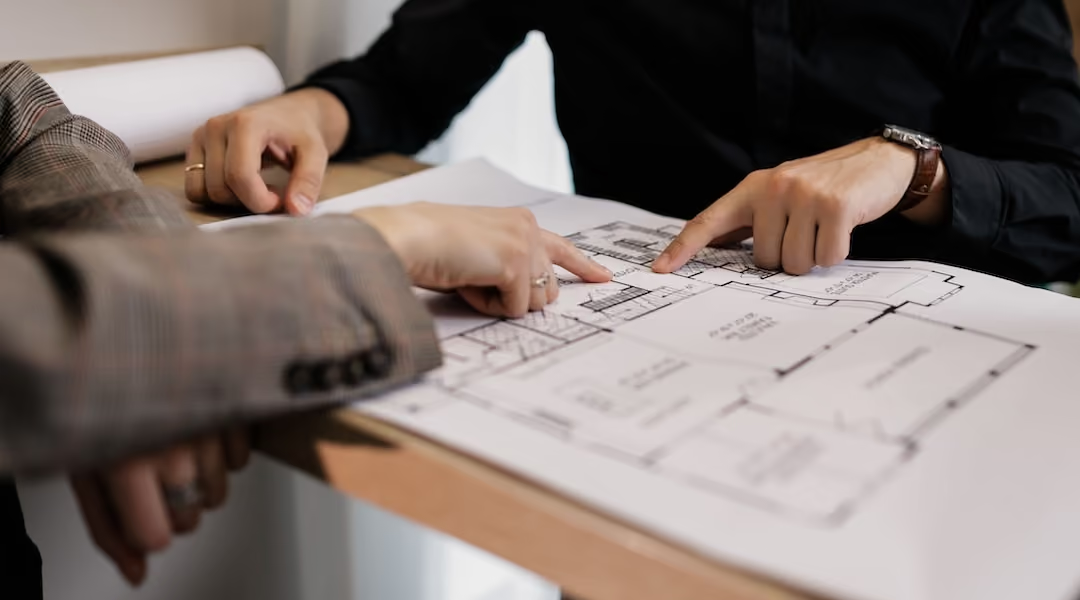
At Office Gallery, we can help create a workspace that will appeal to all personality types. With our office interior design and space planning service, we offer the assistance you need to design a workplace that will help your employees be the best version of themselves.
Contact us today for a consultation.
Key Points
How Do Personality Types Affect Office Space Preferences?
- Extroverts naturally gravitate toward open, collaborative environments where they can see and interact with colleagues throughout the day. They thrive in benching arrangements without visual barriers, drawing energy from social interaction and visual stimulation.
- Introverts, conversely, require quiet, private spaces to maintain focus and avoid overstimulation. They perform best in partitioned cubicles or private offices that minimize distractions and provide control over their environment.
- Research from the B'Journal of Research and Personality demonstrates that when workspace design aligns with personality type, employees experience significantly higher levels of happiness, focus, and job satisfaction.
What Are the Benefits of Benching vs. Cubicles for Different Workers?
- Benching (Open Seating) maximizes visual connectivity and spontaneous collaboration, making it ideal for extroverted team members who benefit from constant social interaction and shared energy.
- Enhanced communication and idea-sharing
- Flexible seating arrangements for changing team compositions
- Cost-effective use of space
- Natural mentoring opportunities
- Cubicles and Private Offices provide the acoustic privacy and visual barriers that introverted employees need for deep, focused work.
- Reduced distractions and interruptions
- Personal control over the immediate environment
- Better concentration for complex tasks
- Defined personal territory that reduces stress
How Can 'Neighborhoods' Create Hybrid Solutions in Open Offices?
- Office neighborhoods are designated zones within open-plan layouts that serve specific functions and personality needs, creating a best-of-both-worlds solution.
- Effective neighborhood concepts include:
- Quiet Zones: Low-traffic areas with acoustic treatments and visual screening for introverted workers
- Collaboration Hubs: Central spaces designed for brainstorming and team meetings
- Focus Pods: Semi-private alcoves with higher partitions for concentrated work
- Social Areas: Lounge spaces that encourage informal interaction and networking
- This approach allows organizations to maintain open-plan benefits while providing the variety of spaces that different personality types require to be productive.
Why Is Employee-Centered Design More Effective Than Traditional Planning?
- Employee-centered design shifts the paradigm from one-size-fits-all to personalized workspace solutions, recognizing that productivity is maximized when the environment fits the worker.
- Traditional office planning often prioritizes:
- Uniform layouts regardless of individual needs
- Cost efficiency over employee satisfaction
- Management preferences over worker functionality
- Employee-centered approaches instead focus on:
- Individual personality assessments and workspace preferences
- Flexible, adaptable layouts that can evolve with team needs
- Active employee involvement in the design process
- Scientific research backing design decisions
- This method leads to higher employee retention, increased productivity, and improved overall workplace satisfaction.
What Role Does Scientific Research Play in Modern Office Design?
- Evidence-based design uses peer-reviewed research to inform workspace decisions, moving beyond trends to create scientifically optimized environments.
- The Journal of Research and Personality study specifically demonstrates that:
- Workspace type significantly impacts employee happiness and focus
- Personality-environment fit is a measurable predictor of job satisfaction
- Misaligned office design can decrease productivity by up to 15%
- Other key research areas include:
- Color psychology and its impact on mood and creativity
- Acoustic design and its effect on cognitive performance
- Biophilic elements and their influence on stress reduction
- Lighting quality and its relationship to circadian rhythms
- Professional designers leverage this research to create data-driven solutions rather than relying on aesthetic preferences alone.
How Can Organizations Implement Personality-Based Office Design?
- Successful implementation requires a systematic approach that balances individual needs with organizational goals.
- Step 1: Assessment
- Conduct personality assessments for all employees
- Survey current workspace satisfaction and pain points
- Analyze work patterns and collaboration needs
- Step 2: Design Strategy
- Create zoned layouts with areas for different personality types
- Plan flexible furniture solutions that can be reconfigured
- Incorporate acoustic and visual privacy options
- Step 3: Professional Implementation
- Partner with experienced space planners who understand personality-based design
- Pilot test design solutions with small groups before full rollout
- Budget for quality furniture and acoustic treatments
- Step 4: Ongoing Optimization
- Monitor employee satisfaction and productivity metrics post-implementation
- Adjust layouts based on usage patterns and feedback
- Plan for growth and changing team dynamics
- This approach ensures maximum ROI from office design investments while creating a workplace that truly supports every team member.